


Latest news with #LafayetteCollege

The Print
 10-08-2025
- Politics
- The Print
Their books now banned in Kashmir, these authors will still write for ‘generation with no access to truth'
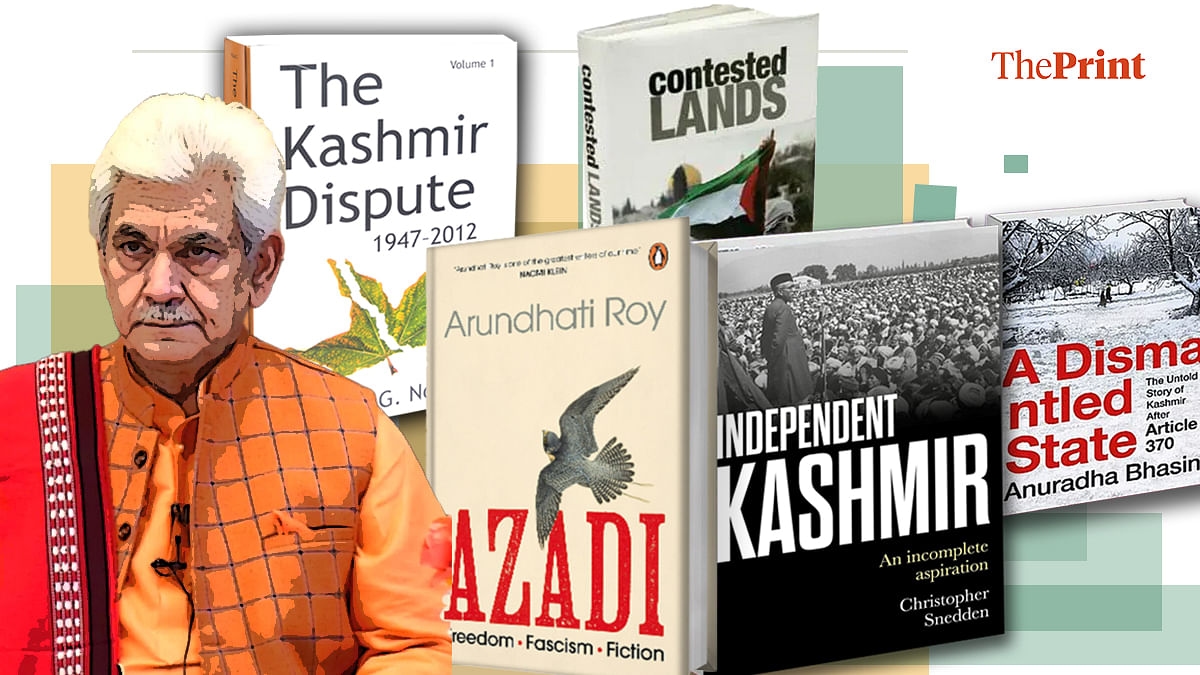
The J&K home department through a notification dated 5 August, 2025, imposed a blanket ban on 25 books written about Kashmir. This included author and activist Arundhati Roy's Azadi (2020), journalist Anuradha Bhasin's A Dismantled State (2022), constitutional expert late A.G. Noorani's The Kashmir Dispute (2013), and Australian political scientist Christopher Snedden's Independent Kashmir (2021), among others. Now, 'life has come full circle' for Kanjwal. The very censorship she wrote about has returned to haunt her. Her book is among 25 titles banned by the J&K home department at the orders of Lieutenant Governor Manoj Sinha. 'It only emboldens me to keep writing. If they're clamping down on literature, it must be saying something significant,' Kanjwal, an assistant professor of history at Lafayette College in the US, tells ThePrint over the phone. New Delhi: It was as a result of the 1953 'coup' that Sheikh Abdullah was ousted, and Bakshi Ghulam Mohammad took over as the second prime minister of Jammu and Kashmir. In her book Colonizing Kashmir: State-Building under Indian Occupation , 38-year-old Kashmiri author Hafsa Kanjwal documented how Bakshi Ghulam Mohammad's regime was marked by censorship of literature, and bans on public gatherings and political speech. The issue of the notification coincided with a book fair in Srinagar. The notification issued by the principal secretary of the home department, Chandraker Bharti said the books propagate 'secessionism'. '…it has come to the notice of the Government, that certain literature propagates false narrative and secessionism in Jammu and Kashmir… This literature would deeply impact the psyche of youth by promoting (a) culture of grievance, victimhood and terrorist heroism,' read the notification. Adding, 'Some of the means by which this literature has contributed to the radicalization of youth in J&K include distortion of historical facts, glorification of terrorists, vilification of security forces, religious radicalization, promotion of alienation, pathway to violence and terrorism etc.' Since the announcement, Jammu and Kashmir police have raided bookshops, followed by inspection of roadside book vendors and other establishments dealing in printed publications in Srinagar and across multiple locations in the Union Territory to confiscate the banned literature. Earlier this year, Srinagar district police declared it had seized '668 books' which it said 'promoted the ideology of a banned organisation'. While the police did not specify the banned organisation, National Conference MP Syed Aga Ruhullah Mehdi cited media reports to say that the police had seized literature by Abul Ala Maududi, the Islamic scholar who founded Jamaat-i-Islami. Jamaat-e-Islami Kashmir, an offshoot of Jamaat-e-Islami, is banned in India under the Unlawful Activities (Prevention) Act. Another offshoot, Jamaat-e-Islami Hind, was banned twice by the Government of India since its formation in 1948, but the Supreme Court revoked the ban on both occasions. As for the J&K home department's blanket ban on 25 books, including political commentaries and historical accounts, the move has drawn criticism not only from literati but also political and religious leaders. Kashmir's chief cleric Maulvi Omar Farooq wrote in a post on X on 7 August: 'Banning books by scholars and reputed historians will not erase historical facts and the repertoire of lived memories of people of Kashmir.' The ban, he said, 'exposes' the insecurities and limited understanding of those behind such 'authoritarian' action. Also Read: 'Abrogation of trust': 6 yrs since Article 370 repeal, civil society urges govt to restore J&K's statehood 'Blend of Orwellian and Kafkaesque' Kanjwal sees the ban as part of a broader, ongoing effort, which she says became particularly stark after 2019, to 'suppress information and silence narratives' that challenge the official discourse. According to her, the earlier crackdown on Jamaat-e-Islami literature didn't attract as much international attention, but inclusion of West-based Indian and Kashmiri authors this time around may have prompted wider outrage. Her own book, published by Stanford University Press and a recipient of the Bernard Cohn Book Prize awarded by the Association for Asian Studies (AAS), underwent rigorous academic review, she says. 'Nothing that was written in my book or the other books that have been banned was factually incorrect or exaggerated.' Days after the ban, Kanjwal like several other authors whose books have been banned, is still contemplating the possible reasons behind the ban. She says it is clear that the aim was to 'suppress information about Kashmir,' but she believes the move has backfired, drawing more attention to the very works it aimed to 'suppress'. Works by Kashmiri authors often offer alternative narratives, she points out, adding that the ban on mostly scholarly texts today could extend to poetry and fiction tomorrow. Currently, Kanjwal is working on a people's history of Kashmir aimed at younger readers, driven by the urgency to preserve and share Kashmiri narratives in a 'climate of erasure'. She says growing censorship affirms the importance of writing about Kashmir, 'especially for a generation growing up without access to political discourse or historical truth.' The banned literature also includes works by noted scholars and writers such as Seema Kazi's Between Democracy & Nation (2009), Ather Zia's Resisting Disappearance (2019), and Essar Batool's Do You Remember Kunan Poshpora (2016), all of which foreground Kashmiri lived experiences, especially of women. Also banned are Al Jihad fil Islam by late Abul Ala Maududi and Mujahid ki Azan by Egyptian cleric late Hassan al-Banna, as well as scholarly works on international politics and law by Piotr Balcerowicz and Sumantra Bose. The banned titles include those published by both Indian and foreign publishers, from academic presses like Stanford University Press and Cambridge University Press to Penguin, HarperCollins, Routledge, and Zubaan. Veteran journalist and author Anuradha Bhasin, whose book A Dismantled State is among those banned, calls the move 'absolutely bizarre,' though not surprising. 'It is part of a pattern,' she tells ThePrint over the phone, pointing to a growing intolerance for independent thought, historical nuance, and rational voices, particularly on Kashmir. Bhasin argues that the banned works, many published by reputable academic houses, are rigorously vetted and based on deep research. 'These are books that bring out the truth … nuanced, well-researched, and grounded in reality,' she says, rejecting the J&K home department's claim that such literature glorifies terrorism or spreads false narratives. Speaking of her own book, Bhasin says it was a product of over a year of journalistic reporting, interviews, and legal vetting. She sees the ban not only as an 'attack' on literature but as part of a broader ecosystem of erasure, 'from manipulated school textbooks to a complete silencing of media, civil society, and now, scholarship.' 'You're going to produce a generation of youngsters who will have no knowledge, who will be reduced to non-thinking persons,' she says. For Bhasin, the ban is particularly disheartening because the targeted books are foundational for academic engagement with Kashmir. 'These are the books that professors recommend. Now, what are university students going to read?' Political scientist Sumantra Bose, author of Kashmir at the Crossroads, tells ThePrint his goal was to identify 'pathways to peace' and a future free of 'fear and war' in Jammu and Kashmir. Dismissing defamatory slurs on his work, Bose calls the ban a 'tragi-comic farce,' citing the police seizing books even at a state-sponsored festival. 'This is a surreal dystopia … a real-life blend of the Orwellian and the Kafkaesque,' he says, adding that such bans are crude, futile in the digital age, and only draw global attention. Calling it 'criminalisation of scholars,' Bose notes both his banned books stem from years of field research in conflict zones. Drawing a parallel, he recalls how the British banned his granduncle Subhas Chandra Bose's book The Indian Struggle in 1935. 'Ninety years later, I follow in the footsteps of a legendary freedom fighter,' he says. Ather Zia, anthropologist and author of Resisting Disappearance and co-editor of Resisting Occupation, another book that has been banned, says the move is not merely about silencing authors but about 'criminalising history, memory, lived realities, and truth-telling.' She, too, calls it part of a broader effort to suppress Kashmiri narratives that challenge the official discourse, particularly those grounded in Critical Kashmir Studies, a well-established academic sub-discipline shaped by Kashmiri scholars over the last two decades. Alongside her own works, she cites Colonizing Kashmir by Hafsa Kanjwal as among the globally taught, peer-reviewed books being targeted. Despite the crackdown, Zia says Kashmiris 'will continue to write, remember, and resist.' ThePrint also reached Christopher Snedden and Essar Batool for a response but both declined to comment. 'An exercise in not forgetting' The ban by the administration has cast a chilling shadow over the region's growing literary landscape, especially for young, emerging authors. Bhasin tells ThePrint that soon after the ban was announced, a young writer reached out to her, unsure of how to proceed in the current climate. Bhasin encouraged them to keep writing, but with caution. 'My advice would be to continue working, but to do it silently and wait for the opportune moment to write,' she says. In the years following the abrogation of Article 370 in 2019, as space for independent journalism in Jammu and Kashmir rapidly shrank under state pressure, many Kashmiris turned to literature as a safer medium of expression. Fiction, memoir, poetry, and personal narrative became tools to explore grief, memory, and resistance. Writers like Mehak Jamal, Sadaf Wani, Zahid Rafiq, Farah Bashir, and Javed Arshi emerged as part of a new wave of Kashmiri voices that began gaining prominence in the post-abrogation period. Their works did not always take overt political positions, but subtly mapped the psychological, social, and cultural consequences of conflict. Jamal, whose book Loal Kashmir: Love and Longing in a Torn Land became available to readers in January this year, tells ThePrint that there has been a slow clampdown on legacy media and other important voices in Kashmir over the past few years. 'That this censorship is getting extended to books from/on the region is shocking but not surprising,' she says, adding that most of the works getting banned are non-fiction academic, historic, journalistic books on the political situation in Kashmir. 'When there is an erasure of such important documentation, it becomes even more imperative for more Kashmiris to tell their stories through various means of literature, media and other forms of storytelling—however small or big. This in itself becomes an exercise in not forgetting,' she says, adding that the decision has left her disheartened. But at the same time, Jamal does not want to stop writing. 'I wouldn't shy away from writing another book when the time comes, or from telling our stories in any way I can. I will always want to speak truth to power.' Kashmiri award-winning author Mirza Waheed says the authors on the list include some of the world's finest historians and thinkers who have written on Kashmir. Bans on books are the worst kind of censorship as they 'attack' knowledge and its transmission from one mind to another, he tells ThePrint. 'A political culture that permits such a thing cannot survive for long,' he says, 'because books, thoughts and words are like spring water, they always find a way to flow on.' (Edited by Amrtansh Arora) Also Read: Restoring J&K's statehood won't be enough. Kashmiris need to be treated like other Indians


Middle East Eye
07-08-2025
- Politics
- Middle East Eye
Kashmir: India bans books by prominent writers over alleged 'secessionist' content
Indian authorities banned 25 books in Kashmir on Wednesday, including several written by prominent authors, alleging they promote "false narratives" about the contested territory and "incite secessionism". The New Delhi-run Home Department issued a notification which accused the books and authors of playing "a critical role in misguiding the youth, glorifying terrorism and inciting violence" against the Indian state. The ban listed 25 books it said had "been identified that propagate false narrative and secessionism", including Booker Prize winner Arundhati Roy's Azadi: Freedom, Fascism, Fiction; The Kashmir Dispute 1947–2012 by A G Noorani and US-based academic Hafsa Kanjwal's Colonizing Kashmir: State-building Under Indian Occupation. The government alleged that the content of the books "would deeply impact the psyche of youth by promoting a culture of grievance, victimhood and terrorist heroism". Kanjwal, an associate professor of South Asian History at Lafayette College, told Middle East Eye that the government's ban "reveals the deep insecurity at the heart of its settler colonial project in Kashmir". New MEE newsletter: Jerusalem Dispatch Sign up to get the latest insights and analysis on Israel-Palestine, alongside Turkey Unpacked and other MEE newsletters "On one hand, it hosts events like the Chinar Book Festival, urging Kashmiri youth to read and celebrate literature. On the other, it aggressively censors the kinds of stories and histories Kashmiris are allowed to access," the award-winning academic said. "This contradiction is central to how settler colonialism operates: through erasure and replacement. Erasure of memory, history, and identity combined with a long-standing effort by the Indian state to overwrite Kashmir's past and replace it with a narrative that legitimises its control. The book ban must be seen in this broader context," she added. Attacks on human rights and freedom of expression have escalated since 2019, when Indian Prime Minister Narendra Modi's government unilaterally stripped Kashmir of its decades-long autonomy and statehood. Book seizures in Indian-controlled Kashmir spark fears of religious censorship Read More » Earlier this year, Indian authorities seized more than 600 books by or about Syed Abul A'la Maududi, a noted twentieth-century Islamic scholar and founder of Jamaat-e-Islami, one of the largest religious organisations in the Indian subcontinent. "Banning books is a defining feature of fascist regimes that fear truth and people's capacities to question state-imposed histories," Mona Bhan, a professor of anthropology at Syracuse University told MEE. "The recent move to ban books marks yet another assault on Kashmiri identity and history, reflecting the broader impunity with which India has exercised control over Kashmir since 1947," she said. "These bans are intended to suppress critical thinking and credible scholarship on Kashmir, making way for state-sanctioned narratives to dominate the Indian public," she added. Kashmir has remained at the heart of a decades-long dispute between nuclear-armed neighbours India and Pakistan, both of which claim the territory in full but control separate parts. Since 1989, the Indian-controlled portion of Kashmir has been in a state of insurgency, with tens of thousands of people arrested, brutalised or killed. Kashmiris widely view the armed revolt as a legitimate freedom struggle. The United Nations views the territory as disputed between India and Pakistan, with several resolutions maintaining the Kashmiri people's right to self-determination and calling for a resolution to the dispute through a UN-monitored plebiscite.
Yahoo
14-07-2025
- Business
- Yahoo
What's behind bitcoin's run toward $125K and what's next
Crypto-related stocks like Coinbase (COIN) are showing signs of strength in a broad crypto rally as bitcoin (BTC-USD) nears $125,000. chief strategist Michele Schneider and Lafayette College chief investment officer Krishna Memani join Opening Bid host Brian Sozzi to weigh in on where crypto could go next and whether institutions are ready to get on board. To watch more expert insights and analysis on the latest market action, check out more Opening Bid here. Michelle, I want to start with you because uh really Bitcoin has taken off uh the past week, two weeks, even the past month. Any signs of fatigue that you're seeing in Bitcoin, Ethereum, really, I guess, at all across the landscape of uh crypto assets? Well, I was always looking for a 125 target, so we're we're darn close to that, but that doesn't necessarily mean. Time to raise your target, Michelle. Let's get the new target on Yahoo Finance or 200,000 maybe? Well, I I I tend to be a little bit more conservative in my in my calls for things, although I have been also known to make bold ones. But in terms of Bitcoin right now, 125 is really where I'm looking at. But what I'm really interested right now, believe it or not, besides Ethereum, which has exploded over 3,000 and that's fantastic. I really like Chainlink. It has made a huge move over the last week. It actually was starting to make a move even before Ethereum did. And if you look at a chart, since that's what I do, right now it's sitting right at a 200 day moving average. So I'm talking about l i n k u s d. And if it gets through there, it hasn't been since January. We have a really interesting setup where this thing can go much higher. From a from a from a standpoint of what Chainlink does, it's a bridge between what's on the blockchain and what isn't on the blockchain. It actually brings that access to the blockchain. That is a future growth area anyway in the whole space from a more fundamental standpoint. So yeah, I think uh I don't see fatigue in some of the old coins. Like I said, Bitcoin will see around 125. I wouldn't necessarily get out, but I would certainly be looking at holding at 120 now, somewhere around that 118, 120. Yeah, just seeing Michelle what uh Brian Armstrong, uh Coinbase CEO's working on. I mean, really laying the foundation for a very strong, fundamentally oriented business. Let me just follow up with some of the things you said. What is the better trade? Do you trade some of these altcoins and look, they are very, very risky or do you go into something more, I guess a proven commodity at this point, no pun intended in the Coinbase? Well, that's interesting you use the word commodity because as an old school commodities trader, what's so great about all the old coins and Bitcoin and and of course being the kingpin, Ethereum and Chainlink, Solana, all of it is that they're so highly technical. So they're risky in that they're not investments necessarily, although that could be changing with this mass adoption. All this legislation is just another feather in the cap of mass adoption, especially with stablecoin and now Circle that IPO proved that people are hungry for some kind of an access to like a credit card, so to speak, for Bitcoin without actually owning it. The point is is that if you really can understand how to look at price action, especially on these volume surges and take advantage and look at it more as an active investment, sort of almost a fun way to make extra money, then I think it's a great space and that's one of the reasons why I love about it. Krishna, we hear uh we've heard consistently uh of late institutions are getting into crypto. Institutions are getting into crypto. Well, you are an institution. What are your thoughts, have your thoughts changed on crypto compared to six months ago? So I'll start by saying that I've been wrong on crypto for 15 years. So don't whatever I say please. There's always a chance to be right, Krishna. And today could be that day. Yeah, I know that but I think the point that was made earlier was a really good one. That is, if you're going to be playing in crypto, you have to play it the way the commodities folks play it, which is this is really not an investment still. Despite all the talk that we see here about changing landscape and things like that, this is still not an investment. It is a speculative vehicle. You can make a lot of money as people already have. And and and but it's not an investment. So we are not involved and it's quite unlikely that we'll remain involved. The only place where I see crypto actually making progress is on the stable coin front. But if you look at valuations of something like Circle relative to the potential amount of money that you could make out of stable coins, I'm I'm not so sure it's it's the right metric.
Yahoo
19-05-2025
- Business
- Yahoo
Moody's Downgrade Should Have Happened Sooner: Memani
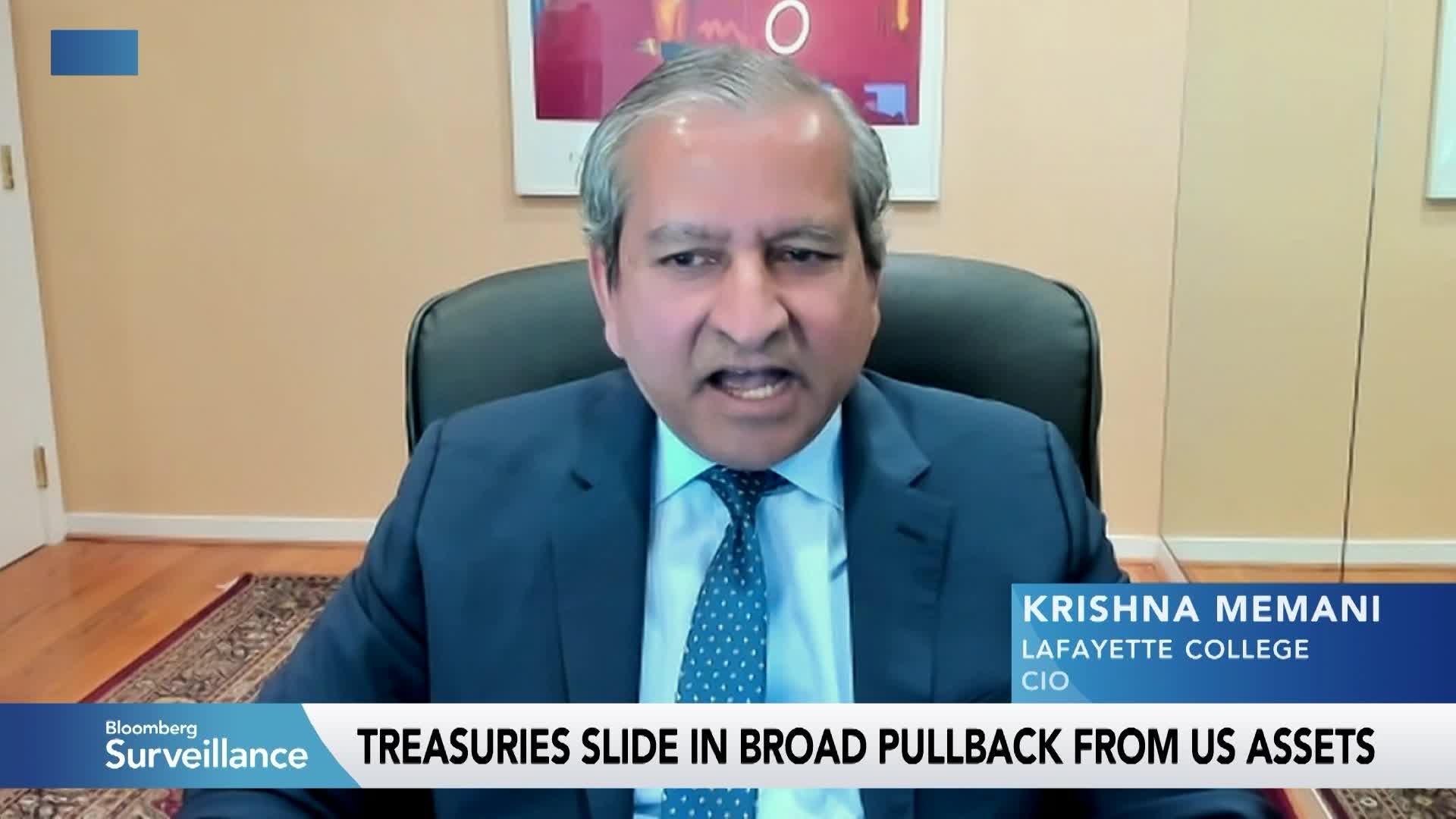
Krishna Memani, Lafayette College CIO, says the Moody's downgrade of the US credit rating should have happened a while ago, but it's not really driving the market right now. He also talks about what could tip the US into a recession. He speaks on "Bloomberg Surveillance." Error in retrieving data Sign in to access your portfolio Error in retrieving data Error in retrieving data Error in retrieving data Error in retrieving data

Bloomberg
19-05-2025
- Business
- Bloomberg
Moody's Downgrade Should Have Happened Sooner: Memani
Krishna Memani, Lafayette College CIO, says the Moody's downgrade of the US credit rating should have happened a while ago, but it's not really driving the market right now. He also talks about what could tip the US into a recession. He speaks on "Bloomberg Surveillance." (Source: Bloomberg)
