



Sisi underscores Egypt's firm position in support of Sudan's unity, sovereignty, stability
Sisi made the remarks as he received on Monday Chairman of the Sudanese Sovereignty Council Lieutenant General Abdel Fattah Al Burhan in the city of Al Alamein.
The meeting touched on the latest developments on the ground in Sudan, as well as regional and international efforts made to restore peace and stability in the country, Presidency Spokesperson Mohamed al-Shennawy said.
Both sides agreed on the importance of intensifying efforts to provide support and assistance to the brotherly Sudanese people, who are enduring severe humanitarian conditions due to the ongoing conflict.
The talks also addressed ways to strengthen bilateral relations, including efforts to rebuild Sudan and open up new horizons for joint cooperation, particularly in economic sectors, in a way that reflects the aspirations of both peoples for integration and mutual development.
The meeting discussed the latest regional developments, especially in the Nile Basin and the Horn of Africa region.
The two sides affirmed their shared vision on priorities related to national security, their commitment to continued coordination and joint action to safeguard water security, and their rejection of unilateral measures in the Blue Nile basin. (MENA)

Try Our AI Features
Explore what Daily8 AI can do for you:
Comments
No comments yet...
Related Articles


Al-Ahram Weekly
 4 hours ago
- Al-Ahram Weekly
Sudan's war of mediation
The peace talks in Sudan are becoming a battleground for power as external actors pursue their own agendas and Sudanese civil society is continuously excluded. In the Al-Fasher region of Sudan, a mother walks 12 miles for medicine only to find an empty clinic. Her son is bleeding from shrapnel wounds as gunfire echoes across the town. This is not just war. It is the collapse of diplomacy itself, where ceasefires exist only on paper and peace processes serve only as political theatre. Sudan's Civil War has become not only a humanitarian catastrophe but also a diplomatic failure. It exposes the limits of the international order. At its core, this is not a conflict between equals but a war between Sudan's national army, the Sudanese Armed Forces (SAF), the only institution with constitutional legitimacy, and the Rapid Support Forces (RSF), a militia built on paramilitary violence, foreign backing, and the exploitation of chaos. The human toll of the war is staggering. More than ten million people have been displaced since it began, making Sudan the world's largest displacement crisis. Millions more face hunger, disease, and the collapse of basic services. This war is not only destroying lives but is also erasing the foundations of the Sudanese state. The SAF and RSF control fragmented territories, and international mediation in the war has mirrored this fragmentation, creating confusion instead of coherence. The US and Saudi Arabia are leading the Jeddah Process that hopes to end the conflict, while the African Union (AU) and the Intergovernmental Authority on Development (IGAD) are pursuing rival tracks. The UN, once central to such crises, appears increasingly sidelined. This pluralism of mediation, far from reinforcing undertakings, has bred incoherence and duplication. The RSF has used these diplomatic gaps to prolong the war, meaning that ceasefires, announced with international fanfare, collapse again and again. Instead of protecting civilians, they allow the militia to regroup, rearm, and entrench its siege tactics. For ordinary Sudanese, the word 'ceasefire' now means little more than a pause before more bloodshed. Regional actors have played contradictory roles, with some seeking to manage security spillovers and others pursuing their own political and economic agendas. Arms flows, covert diplomacy, and financial support have fuelled the conflict rather than contained it, and global diplomacy has struggled to establish a unified stance. Washington presses for humanitarian access but hesitates to apply real pressure, while Europe focuses more on migration than long-term stability. This timid approach emboldens those who profit from the war while discouraging coordinated action. Perhaps the greatest failure of diplomacy has been the erasure of Sudanese civilians from the negotiating table. The 2019 Revolution against former Sudanese president Omar Al-Bashir was led by resistance committees, women's groups, and civil society. These forces embodied Sudan's democratic aspirations, yet today they are invisible in the peace talks between the SAF and the RSF, and Western diplomats continue to negotiate with these while sidelining the very actors who represent the country's hope for a legitimate and inclusive future. The deliberate use of starvation and siege tactics by the militias is a grave violation in the war. Under Article 54 of Additional Protocol I to the Geneva Conventions, starving civilians as a method of warfare is strictly prohibited under international law and constitutes a war crime. By failing to confront this, the mediation process in Sudan is not only ineffective but is also complicit in normalising violations that strike at the very heart of civilian protection. Reports from the Darfur and Kordofan regions of Sudan describe villages where civilians have been deliberately cut off from food and medicine in the war. Grassroots organisations, however, have not disappeared: resistance committees organise relief convoys; women's networks run makeshift clinics; and local charities distribute scarce supplies in besieged areas. These actors are maintaining some fragile social cohesion amid displacement and hunger. To treat them as marginal voices is not only unjust, but it is also unsustainable. Any peace agreement that excludes them will collapse under the weight of its own illegitimacy. Since April 2023, every ceasefire in the war has been violated. The Jeddah Process's early promise devolved into meaningless pauses that were exploited by both sides, especially by the RSF, to expand military operations. Without credible enforcement, ceasefires serve media optics, not civilian safety, and for many civilians in the Al-Fasher, Omdurman, or Nyala regions of Sudan 'truce' has become a word synonymous with betrayal. For years, international institutions have promised impartiality and principled engagement in Sudan, but the reality has been selective outrage, ad hoc coordination, and inconsistent leverage. Many Sudanese now ask whether the international system is capable of mediating in good faith in a conflict in which the contrast with Ukraine or Gaza is stark. The latter conflicts have received sustained international media coverage, while the conflict in Sudan has been neglected, suggesting that some wars are deemed too complex or too remote to merit serious engagement. Regional powers have stepped into the vacuum, too often not as neutral mediators but as stakeholders with vested interests. Their 'competitive mediation' undermines the very idea of collective diplomacy, and multiple tracks have not created a momentum for peace as much as so much diplomatic clutter. Three shifts are essential in order to bring about peace in Sudan. First, the mediation tracks must be unified under a single platform. The UN-AU-IGAD tripartite mechanism remains the best option, but only if it is given real political weight and resources. Second, accountability must be enforced consistently. External actors that provide weapons, money, or political cover must face the consequences. Toothless mediation is worse than none, since it legitimises violence without restraining it. Third, Sudanese civilians must be central to the peace process. Resistance committees, women's groups, and local initiatives must have a seat at the table and not as symbolic voices but as co-leaders. The war in Sudan is more than a national tragedy; it is a test of international diplomacy under fire. If the mediation continues to appease the militias and sideline civilians, the consequences will not remain confined to Sudan. Refugee flows will expand, armed groups will proliferate, and neighbouring states will become destabilised. Yet, Sudan also offers a blueprint for change, if the SAF is recognised as the lawful authority, civilians as the custodians of peace, and international law as the guiding principle in the peace process. The alternative is appeasement disguised as peace. The Sudanese war is not a war between equals. In Sudan today, the state is under siege by a militia. To pretend otherwise is to misread both the crisis and the cure. International diplomacy must stop treating Sudan's Civil War as just another conflict and start recognising it as a test of the global order. Restoring legitimacy in Sudan requires the courage to end fragmentation, confront the militias, and put civilians at the centre of the peace process. Anything less will fail the country, and this failure will echo far beyond Sudan's borders. The writer is a senior researcher and director of the East Africa and Sudan Programme at Fox Research AB in Sweden. * A version of this article appears in print in the 21 August, 2025 edition of Al-Ahram Weekly Follow us on: Facebook Instagram Whatsapp Short link:


Egypt Independent
13 hours ago
- Egypt Independent
FM stresses urgent need to mobilize int'l support for Gaza reconstruction plan
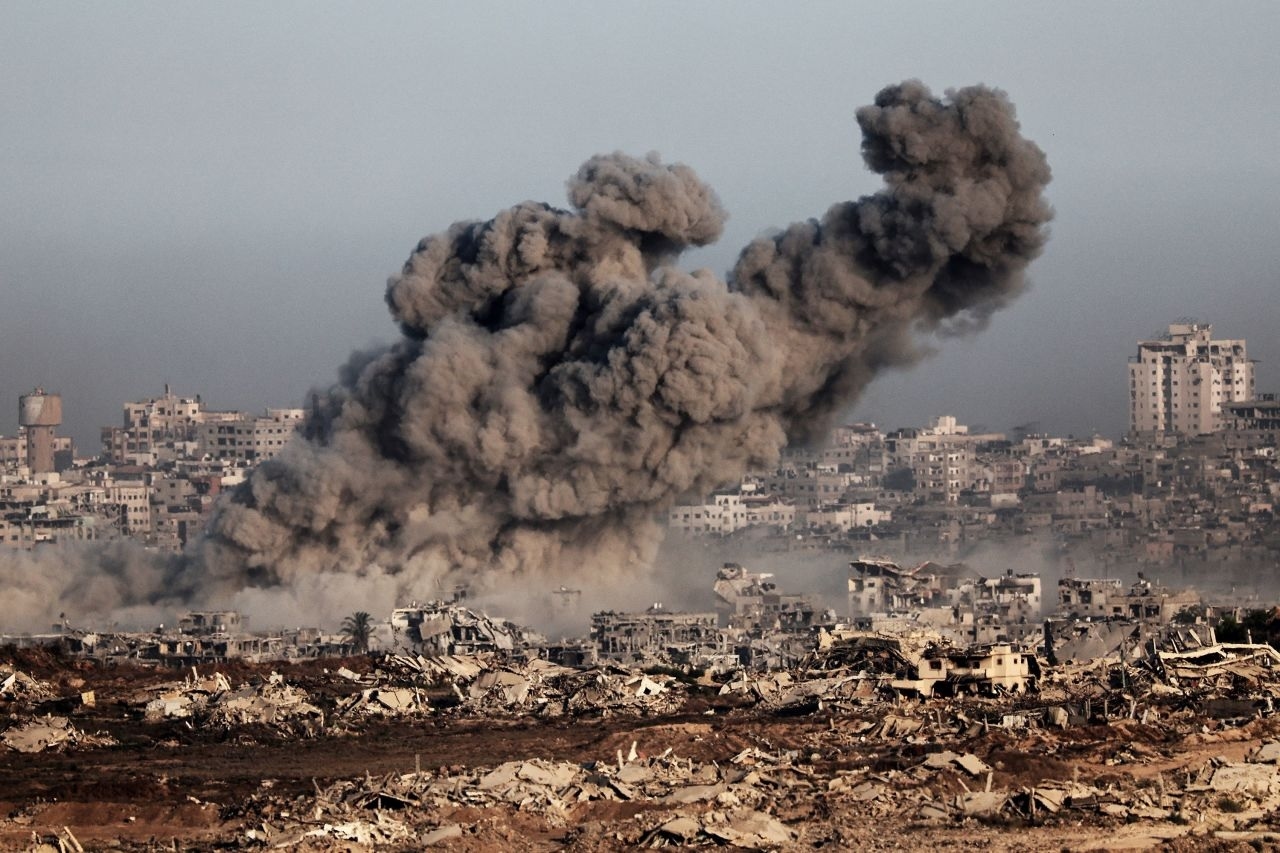
CAIRO, Aug 17 (MENA) – Minister of Foreign Affairs, Emigration and Egyptian Expatriates Badr Abdelatty stressed on Sunday the urgent need to sustain international support for implementing the Arab plan for Gaza's reconstruction, which outlines requirements for early recovery, infrastructure rebuilding, and restoring basic services as a prelude to the enclave's long-term development. Abdelatty made the remarks during his meeting in New Alamein city with Palestinian Prime Minister Mohammed Mustafa, in the presence of Social Solidarity Minister Maya Morsy and Higher Education and Scientific Research Minister Mohamed Ayman Ashour. Abdelatty reviewed preparations for the upcoming Cairo Conference on Gaza Early Recovery and Reconstruction to be convened once a ceasefire is reached, with both sides discussing detailed arrangements for the event. The minister reaffirmed Egypt's unwavering support for the Palestinian people in obtaining their legitimate rights and establishing their independent state, while also updating on Egypt's mediation efforts to secure a ceasefire. He stressed Egypt's categorical rejection of any displacement of Palestinians, denouncing Israel's policy of starvation and blockade in Gaza, as well as its systematic settlement expansion and violations in the occupied territories. The minister underlined Egypt's commitment to supporting the Palestinian Authority (PA) to enable it to assume its responsibilities in both Gaza and the West Bank, highlighting the need to activate a temporary Gaza management committee until the PA fully resumes its role in the Strip. He also voiced Egypt's readiness to help restore order by training Palestinian police forces to fill the security vacuum in Gaza. For her part, Minister Maya Morsy outlined Egypt's humanitarian efforts in Gaza, noting that the Egyptian Red Crescent has facilitated the entry of tens of thousands of aid trucks through the Rafah border crossing carrying hundreds of thousands of tons of relief supplies, alongside dozens of ambulances. Egypt has also treated thousands of injured and ill Palestinians at its hospitals, she added. Meanwhile, Minister Ashour reviewed the executive framework and program documents for the reconstruction plan, emphasizing the importance of ensuring effectiveness and sustainability across infrastructure, services, social protection, economic development, and local governance. He confirmed ongoing coordination with Palestinian counterparts to finalize the plan in its complete form. The Palestinian premier hailed Egypt's leading role in supporting the Palestinian cause and substantial humanitarian efforts in delivering aid to Gaza, praising Cairo's initiative in drafting the Arab plan for Gaza reconstruction and its work on early recovery. (MENA)
Egypt Independent
15 hours ago
- Egypt Independent
PM reaffirms Egypt's support for Palestinian statehood, rejection of displacement plans
NEW ALAMEIN, Egypt, Aug 17 (MENA) – Prime Minister Mostafa Madbouly on Sunday reaffirmed Egypt's unwavering support for the Palestinian cause and its opposition to any plans aimed at displacing Palestinians or undermining their right to statehood. In a meeting with Palestinian Prime Minister Mohammad Mustafa in the coastal city of New Alamein, Madbouly stressed Egypt's commitment to ending Gaza war and supporting the Palestinian people's legitimate rights, including the establishment of an independent state based on the 1967 borders with Al Quds (East Jerusalem) as its capital. He reiterated Egypt's rejection of continued settlement expansion, home demolitions, and attempts to alter the demographic reality on the ground. Madbouly also underlined Egypt's ongoing humanitarian support through the Rafah border crossing and its diplomatic efforts with Qatar and the United States to broker a ceasefire and ensure sustainable aid delivery. The two sides discussed preparations for a Cairo conference on early recovery and reconstruction in Gaza, which Egypt plans to host following a ceasefire. Foreign Affairs, Emigration and Expatriates Minister Badr Abdelatty praised the level of Egyptian-Palestinian coordination and emphasized the importance of engaging international donors in the post-conflict recovery phase. He reaffirmed Egypt's commitment to the two-state solution as the only path toward lasting peace.
