



Mohan Bhagwat to lead ‘Kanyadaan' of 125 girls in Varanasi today
RSS Chief
Mohan Bhagwat on the occasion of Akshay Tritiya at Sankuldhara Pond in Kashi on Wednesday.
To send out message of
caste and social equality
, Dalit grooms will take part in 'ghudchadhi' (mounting the bridal steed) ritual and reach the wedding 'mandap' on horses. Inspired by Bhagwat, Sangh functionary kshetra karyawah (regional in charge) Virendra Jaiswal, did not hold reception party after his son's marriage and decided instead to conduct Kanyadaan of girls from poor families and invited Bhagwat to perform the ritual. "Initially, we were preparing for wedding of only 111 couples, but as requests mounted, the number increased to 125," said Jaiswal, mentioning that the event would symbolise the RSS chief's call for 'one temple, one well, one crematorium' as not only do the selected couples represent all castes, but even the ritualists will also not be only Brahmins but different castes, who are in Vedic and Karmakand studies.
With the arrival of Bhagwat in the afternoon, the rituals of 'Var-Darshan' (viewing groom) will take place. Grooms will march to the wedding venue in a baraat (procession). Grooms from upper, backward and Dalit classes will ride together on horses, carriages and chariots, said the Sangh functionaries busy in finalising preparations. Dignitaries from various sections of society will play the role of guardians and wash the feet of the bridegrooms.
To inspect finalisation of arrangements, police commissioner Mohit Agrawal, divisional commissioner S Rajalingam, district magistrate Satyendra Kumar and other senior officials reached Sankuldhara. The organisers shared a detailed itinerary with officials, saying the wedding procession will start at 4pm from Sankuldhara Pond and reach Dwarkadhish Temple amid beats of dhols, bands, DJ and fireworks. At the same venue, rituals of kanyadaan by Bhagwat will be performed late evening. After the rituals, Bhagwat will address all, which will be followed by a feast on Ramanand School campus. The organisers said Akshay Tritiya is known as a fest of daan (donations) and people will be encouraged for blood and eye donations.
Hashtags

Try Our AI Features
Explore what Daily8 AI can do for you:
Comments
No comments yet...
Related Articles

Indian Express
 a day ago
- Indian Express
Rape case against rapper Vedan: Hearing anticipatory bail plea, Kerala HC told he's ‘habitual offender'
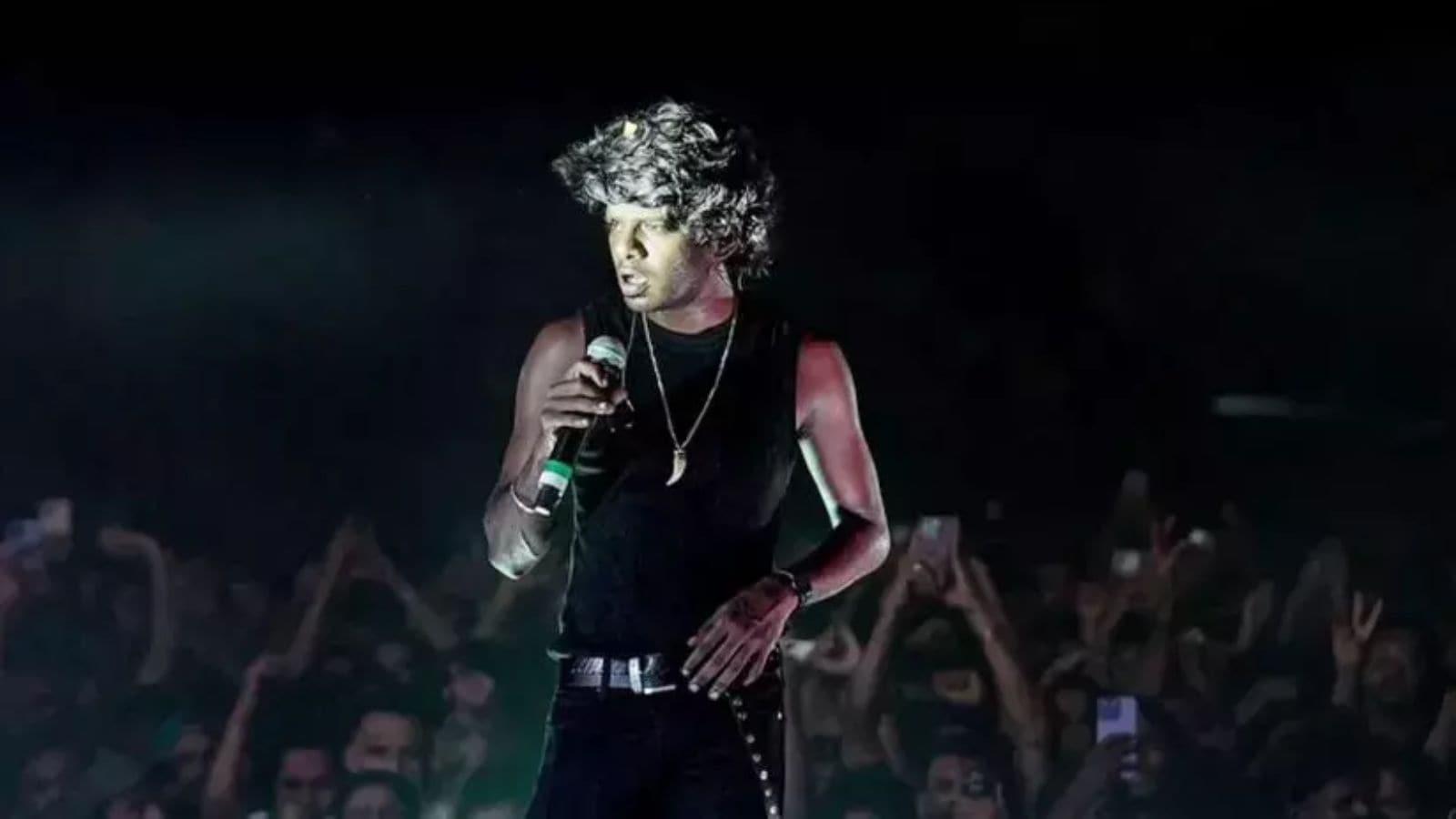
The Kerala High Court on Monday allowed a woman who accused rapper Hiran Das Murali, known by his stage name Vedan, of sexual assault to be impleaded as a party in his anticipatory bail plea. Vedan has allegedly been on the run for more than two weeks after the Kochi city police registered a rape case against him based on a complaint from a young doctor. When the High Court took up the anticipatory bail plea of the accused, the de facto complainant sought that the rapper be declared a habitual offender. Her counsel pointed out that Vedan is facing two other rape complaints, apart from two drug cases (under the NDPS Act). In 2021, too, he faced a sexual misconduct allegation and made a public apology. He is also facing a case under the Wildlife Protection Act for allegedly wearing a pendant made of a suspected leopard tooth. The court will hear the matter on Tuesday. Last week, the Kochi city police issued a lookout notice against Vedan, 31, a native of Thrissur. A Dalit voice in the Kerala rap scene, Vedan hit the news in April this year after police arrested him in drug cases. His arrest on charges of possessing the suspected leopard tooth triggered outrage on social media as people blamed forest officials for their 'overenthusiasm'. However, things turned in favour of Vedan after he apologised to his younger fans for being a bad influence with respect to drug use, and the state government started promoting him. Following the leopard tooth case, Vedan faced a sympathy wave, attracting huge crowds for his shows. The ruling CPI(M) backed Vedan, saying that the criticisms against him were attempts to suppress dissent by those who oppose the BJP's ideology. The Kerala government invited Vedan to perform at events marking its 10th anniversary in power. While facing the rape case, Vedan had a lineup of shows, which were later cancelled. In June, the University of Calicut decided to include Vedan's song in the degree-level syllabus of Malayalam language and literature. The university plan was for a comparative study between Vedan's song, 'Bhumi Njan Vazhunnidam', and Michael Jackson's 'They Don't Care About Us'. In protest against the decision, the BJP petitioned the Governor seeking the withdrawal of Vedan's song.


Time of India
2 days ago
- Time of India
Viral video: Maharashtra officer suspended for singing Bollywood song at his own farewell; allegations of caste bias emerge
In a bizarre incident, a government official in Maharashtra has been suspended after a video of him singing a Bollywood song at his farewell party went viral on social media. The clip shows the officer casually singing while seated in his official chair, which sparked criticism for undermining the dignity of his position. The incident drew widespread attention on social media, prompting authorities to take disciplinary action, citing inappropriate conduct in a formal setting. Video of official singing Bollywood song goes viral Tehsildar Prashant Thorat was captured on video singing 'Yara Teri Yari Ko', a popular song from the 1981 Amitabh Bachchan film Yaarana. The footage shows Thorat performing the song while surrounded by people applauding and clapping along. Further, the video shows a signboard behind Thorat displaying the title "Taluka Magistrate" surfacing. On July 30, he was transferred to Renapur in neighbouring Latur from Umri in the Nanded district. Since both areas are in the same division, he took charge of his new posting the same day. Thorat sang the song at his send-off party, which was organised on August 8 in Umri. The video of the farewell, once shared on the internet, didn't sit well with social media users. Many slammed Thorat, claiming that singing songs while sitting in the official chair is inappropriate and undermines the seriousness of his position. A Tehsildar from Maharashtra, Prashant Thorat, has been suspended after a video of him singing the Bollywood classic 'Yara Teri Yaari Ko' from Yaarana at his farewell went viral. The clip, showing him in his official chair with colleagues clapping along, sparked controversy. The… Internet slams the action taken against the official Once the video from the send-off surfaced online, it sparked backlash on social media. Many users criticised Thorat, arguing that performing a song while seated in an official chair was unprofessional and diminished the dignity of his position. Another said, A Dalit-backwards community tehsildar, Prashant Thorat, sang a song 'Tere Jaisa Yaar Kahan…' at a farewell ceremony. And the government suspended him. The video went viral, the excuse was indiscipline. But the question is: Ministers were openly playing rummy in the assembly, so why weren't they suspended? This punishment is not for singing a song, but for caste and identity. The Dronacharya lobby is still operating with the same mentality. "Society must decide: Is singing a song a crime, or is being a Dalit a crime?" एक दलित-पिछड़े समाज के तहसीलदार प्रशांत थोराट ने विदाई समारोह में सिर्फ़ गाना गा दिया 'तेरे जैसा यार कहाँ…'और सरकार ने उन्हें सस्पेंड कर दिया। वीडियो वायरल हुआ, बहाना बना अनुशासनहीनता।पर सवाल ये हैविधानसभा में मंत्री खुलेआम रम्मी खेल रहे थे, फिर उन्हें क्यों नहीं सस्पेंड… While on the defensive, he said, "The issue is not about singing; the issue is about caste and the system. If those in power play games in the assembly, they get away with it, but if a Dalit-backwards officer sings a song, they face punishment! Discipline is just an excuse; the real reason is social discrimination." To stay updated on the stories that are going viral, follow Indiatimes Trending.


The Hindu
2 days ago
- The Hindu
The concert, Ramakka and I, unveils the trials and triumphs of Karnataka's Jogati community
Shilpa Mudbi Kothakota (researcher, singer, performer, theatre artiste and documentary filmmaker) and Jogati Ramakka (transgender woman and folk artiste from North Karnataka) share a great camaraderie. The two have now devised a concert, Ramakka and I, featuring themselves. It was presented by Centre for Community Dialogue and Change (CCDC) at the Indian Social Institute, Bengaluru, recently. Earlier, they also performed at Suchitra Cinema and Cultural Academy. The concert, held in an intimate setting, turned out to be a dialogue between the artistes and the audience. 'We are not always looking to taking it to the proscenium. We are more interested in talking about the song and why it is being sung. It means so much to a community,' says Shilpa, who has also learnt to play instruments such as choudki and tuntuni. She even organises choudki workshops to encourage people to learn to play it. Shilpa has always been invested in the lives of Jogatis — transgender individuals and folk artistes, dedicated to the worship of goddess Yellamma — a marginalised community. In 2012, Shilpa set out to document the forgotten or vanishing folk art forms of Karnataka, and in 2017, along with her husband Adithya Kothakota, established the Urban Folk Project. The aim is to highlight Karnataka's lesser-known art forms in urban settings and represent varied communities. Growing up in Bengaluru, Shilpa felt a disconnect between urban and rural life. She got drawn to folklore while exploring her own Dalit-Bahujan roots. It was while working on a play on the Sri Lankan civil war in Puducherry, she engaged with the folk forms of Yellamma, practised in North Karnataka. In this ritualistic performance, Jogatis and Devadasis sing and dance, depicting Renuka Yellamma's life story, narrating how Renuka, mother of Parasurama, transformed into the revered Yellamma. Talking about the idea behind launching the Urban Folk Project, Shilpa says, 'People who earn most from folk performances are not those who have been practising these art forms for generations. There is not much understanding about what is folk and who it belongs to.' Shilpa, along with her family, left the hustle and bustle of Bengaluru to make Kalaburagi home and built a space for research, performances, residency and workshops that delve into the world of jogatis and their lives. Before that, for two years, Shilpa and Adithya conducted Yellamma storytelling sessions at the Cubbon Park Bandstand in Bengaluru. During the pandemic, through the Urban Folk Project, they live-streamed their sessions from Kalaburagi. Shilpa met Ramakka in 2019, when the duo recorded 'Aadi baa magane Raama, Noduve kannina tumbaa' (Come, my son Rama, let me look at you to my heart's content). Little did they know that the song would go viral and was later included in the Kannada film, Oorina Gramastharalli Vinanthi. The song was sung by Jogatis — Ramakka, Manjamma, Anjalimma and Gowramma. Having spent years with jogatis, Shilpa is aware of their struggles too — they are feared yet bullied, have interpersonal rivalries and are vulnerable to diseases. 'I have interacted with them so much that I have come to understand what sexuality and gender mean,' says Shilpa.
