


Three idyllic days in Jordan: An inspiring journey through time
The Jordan Tourism Board is unveiling an exciting new campaign that showcases short, idyllic getaways in the historic kingdom. This first journey in our series demonstrates how you can capture in just three days the essence of Jordan's compelling attractions, from ancient civilizational sites to its green pastures.
Three days of travel might seem ambitious for a country that is home to one of the world's most famous ancient cities. Yet Jordan welcomes you to inimitable experiences that can be enjoyed in just a long weekend.
Day One: Discover Amman's Hidden Depths
The Citadel, perched on the city's highest hill, offers sweeping views and takes you through the heart of the great empires that shaped the world order - from the Roman to the Byzantine and to the Umayyad periods.
In the afternoon, the historic downtown offers several surprises around every corner: artisan coffee roasters tucked into ancient buildings, street vendors preparing falafel and galleries showcasing contemporary Arab art. At Rainbow Street, restaurants serve Levantine cuisine in century-old villas.From the depths of civilizational quests to the jovial moments of here-and-now, Amman has everything for you.
Day Two: Petra's Quiet Moments
Nothing prepares you for the sublime, surreal and spiritual experiences that await you at Petra, the capital city of the Nabataean Kingdom in the second century BC. There is something magical about standing at Siq in Petra as dawn breaks, watching rose-colored walls and the narrow gorge with its ancient wonders.
The bliss of travel begins en route Petra taking you through landscapes that shift from urban to ancient in just a few hours. It is recommended to arrive early: the morning light plays off the rose-colored rocks, creating a fascinating display of shadows and textures. Beyond the famous Treasury lies a vast archaeological site with hidden tombs and viewpoints.
Head to the village of Umm Sayhoun for an authentic lunch, where families serve traditional mansaf in humble surroundings. Spend the rest of the day visiting the Monastery, Petra's largest monument, where the rewards include mesmerizing views and the satisfaction of discovering what lies beyond the words in your guidebook.
Day Three: Green Treasures of the North
The third day brings a delightful shift in scenery as you explore Jordan's verdant north. Start from Jerash, rich not only in its ancient Greco-Roman and Oriental influences but also for its lush greenery that serve as a delightful contrast to the honey-colored ruins.
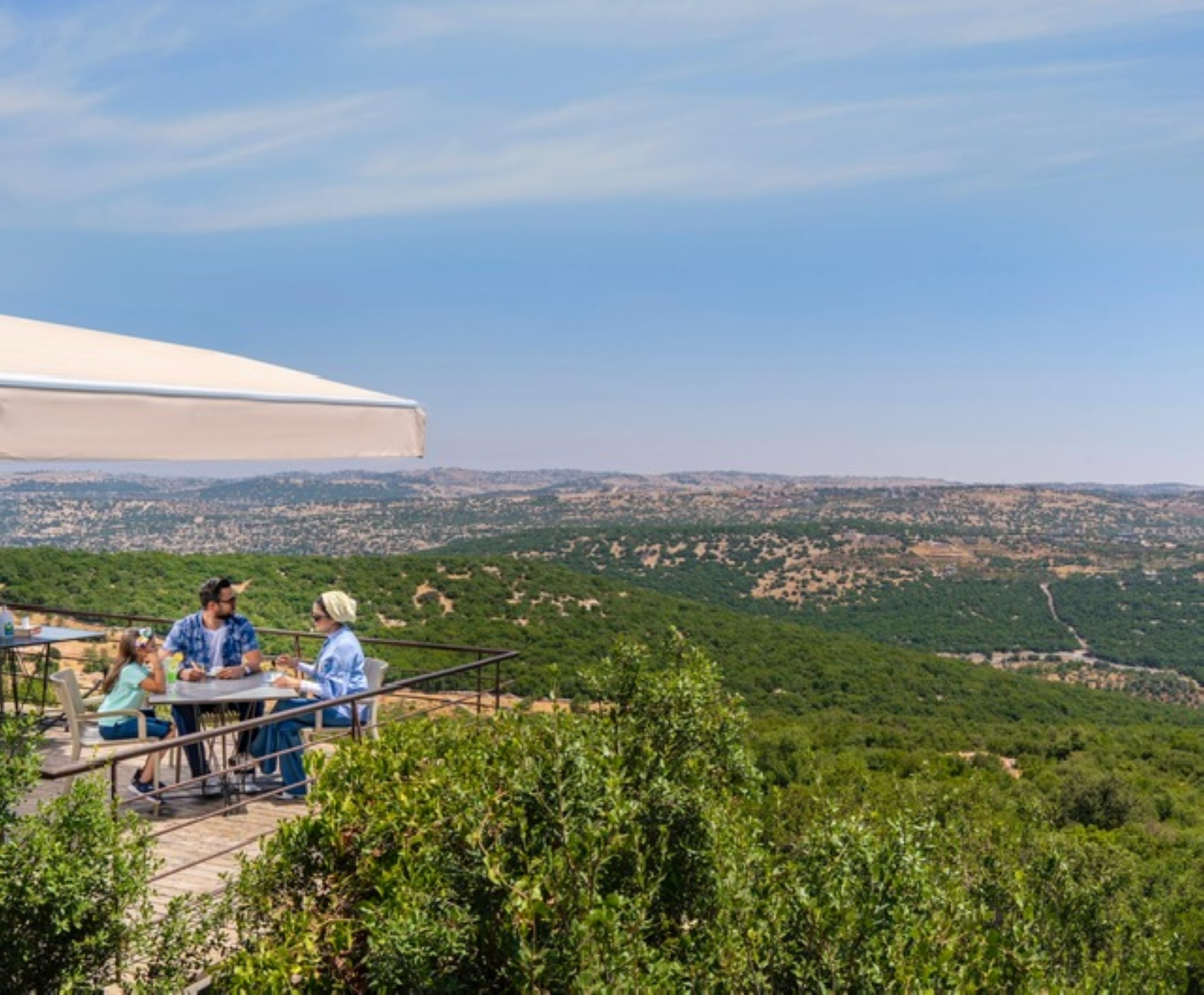
By midday, head to Ajloun, where the landscape transforms into one of olive groves and woodland - another opportunity for you to enjoy nature in its pristine setting. A 12th-century castle, perched proudly on a hilltop, offers panoramic views. The surrounding forest reserve is a breath of fresh air.
You can hike along the Soap House Trail, where the scent of wild pistachio and strawberry trees fills the air. At the Orjan village, you can watch women craft olive soap using centuries-old methods.
Three days in Jordan may feel short, but they leave an indelible mark. They are an invitation to return - because there is so much mystery and wonder awaiting you every time you visit the timeless attractions of the country.
For more information:
[email protected]

Try Our AI Features
Explore what Daily8 AI can do for you:
Comments
No comments yet...
Related Articles


Zawya
 10 hours ago
- Zawya
Big-ticket events set the stage for tourism growth in the Middle East
According to the ATM Travel Trends report, 50% of industry experts consider leisure events as a key opportunity for the region's tourism growth Experts speaking at ATM 2025 discussed how global sports tournaments, cultural festivals and music events across the region are boosting tourism and economic growth Dubai, United Arab Emirates: 'Big-ticket' events are playing a pivotal role in driving international tourism and accelerating economic growth, according to experts speaking recently at Arabian Travel Market (ATM) 2025. In the GCC alone, the event and exhibition market is expected to reach US$827 million by 2029, growing at a CAGR of 3.94%. Following the global success of mega-events such as the FIFA World Cup Qatar 2022 and Expo 2020 Dubai, momentum is building across the region as Saudi Arabia prepares to host the 2034 World Cup. Discussing the evolution and impact of these events, panellists including H.E. Khalid Jassim Al Midfa, Chairman, Sharjah Commerce and Tourism Development Authority; Sebastien Doussin, Senior Vice President - Global Travel Services & Destination Management. Dnata and Noor Ahmad Hamid, CEO, Pacific Asia Travel Association (PATA), shared fascinating insights at ATM 2025, where the events industry was under the spotlight. The panel addressed how big-ticket events – so-called for their high value, cost and impact – have demonstrated their ability to attract millions of international visitors, boost hotel occupancy, stimulate infrastructure growth and generate long-term brand positioning for host destinations. Highlighting the importance of understanding the long-term strategic value of big-ticket events beyond immediate sales, H.E. Khalid Jassim Al Midfa commented: ' Big-ticket events provide a destination with an opportunity to establish brand positioning and exposure in a competitive global environment. These events play a vital role in supporting broader government objectives, but it is essential to invest in the right product for your destination.' Doussin reaffirmed the importance of large-scale events in destination positioning, referencing the growth of the Abu Dhabi Grand Prix, the surge of international golfing tournaments throughout the UAE and the launch of NBA events in the capital. Commenting on the impact of technology on events, Doussin said: 'Technology has already changed big-ticket events, especially in terms of distribution and customer experience. All of the ticketing for the FIFA World Cup in Qatar was completely digital through the official event app, offering flexibility and ease of use. Ultimately, technology enables an event to become more seamless, easier and enjoyable.' Meanwhile, Hamid urged the industry to broaden the definition of big-ticket events to include exhibitions, conferences and cultural performances. He referenced Bangkok's weekly concerts, which are mainly K-pop driven, as examples of how live entertainment extends tourist stays. Supporting the panel's observations, the ATM Travel Trends report highlights the rising appeal of live entertainment and sports in influencing travel decisions. Leisure events were outlined as the top opportunity for tourism growth among 50% of industry experts, as consumer demand for in-person and cultural experiences has increased significantly in recent years. The trend of combining traditional leisure and business travel, or 'bleisure', has also accelerated as increased remote working and flexible working visas have enabled more people to live and work overseas. Building on this, business travellers are often extending their stays in destinations, creating a new opportunity in this rapidly expanding sector. The report also highlighted that business events (MICE) are emerging as a significant driver of tourism growth across the Middle East, complementing the region's thriving leisure sector. Global business travel reached a record US$1.4 trillion in 2024 and is projected to rise to US$2 trillion by 2030. The Middle East is well-positioned to capture a growing share of this lucrative market, increasing from approximately 2.5% in 2024 to over 3% by the end of the decade, supported by world-class infrastructure, a strategic location, and an expanding schedule of high-profile events. Danielle Curtis, Exhibition Director ME, Arabian Travel Market, concluded: 'As big-ticket events continue to gain global prominence, their role in shaping the future of tourism, driving economic diversification and enhancing international reputation has never been more evident. The Middle East, with its strategic vision, world-class infrastructure and focus on innovation, is well-positioned to lead the next era of global event tourism.' Building on the success of its inaugural edition, IBTM@ATM will return to ATM 2026, which takes place at the Dubai World Trade Centre from 4-7 May 2026, with a dedicated zone within Hall 3, highlighting the show's strategic focus on the global business events sector. Designed to facilitate high-value connections, the zone allows business event suppliers to showcase, promote their destinations and services, and engage with pre-qualified international event planners, Professional Conference Organisers (PCOs), and associations through an exclusive hosted buyer programme. This specialised area will once again host the IBTM Stage, providing a comprehensive conference programme tailored to industry professionals, encouraging knowledge exchange and thought leadership. IBTM@ATM 2026 is set to be a vibrant hub for innovation, collaboration, and business growth in the global events industry. ATM will return to the Dubai World Trade Centre from 4-7 May 2026. Now in its 33rd year, Arabian Travel Market (ATM) is the leading global platform driving growth and innovation across every sector of travel and tourism. Held annually in Dubai – the gateway to global travel and tourism with its unmatched connectivity – ATM is where the energy of opportunity comes to life. More than just an event, ATM is a dynamic hub for industry communities, with forums, experiences, and networking that continue well beyond the show floor over the week. Now in a period of rapid expansion, ATM has grown 16% year on year, attracting over 55,000 travel professionals from 166 countries. The next edition of ATM will take place in Dubai from 4–7 May 2026. About RX RX is a global leader in events and exhibitions, leveraging industry expertise, data, and technology to build businesses for individuals, communities, and organisations. With a presence in 25 countries across 42 industry sectors, RX hosts approximately 350 events annually. RX is committed to creating an inclusive work environment for all our people. RX empowers businesses to thrive by leveraging data-driven insights and digital solutions. RX is part of RELX, a global provider of information-based analytics and decision tools for professional and business customers. About RELX RELX is a global provider of information-based analytics and decision tools for professional and business customers. RELX serves customers in more than 180 countries and has offices in about 40 countries. It employs more than 36,000 people over 40% of whom are in North America. The shares of RELX PLC, the parent company, are traded on the London, Amsterdam and New York stock exchanges using the following ticker symbols: London: REL; Amsterdam: REN; New York: RELX. *Note: Current market capitalisation can be found at World Travel Market (WTM) portfolio comprises leading travel events and online portals across four continents. The events are: WTM London is the world's most influential travel & tourism event for the global travel community. The show is the ultimate destination for those seeking a macro view of the travel industry and a deeper understanding of the forces shaping it. WTM London is where influential travel leaders, buyers and high-profile travel companies gather to exchange ideas, drive innovation, and accelerate business outcomes. Next event: 4 to 6 November 2025 at ExCel London. WTM Latin America takes place annually in the city of São Paulo and attracts around 20,000 tourism professionals during the three-day event. The event offers qualified content together with networking and business opportunities. In this its ninth edition – there have been eight face-to-face events along with a 100% virtual one, which was held in 2021 – WTM Latin America continued to focus on effective business generation, and achieved the advance booking of six thousand meetings that were held between buyers, travel agents and exhibitors in 2022. Next event: 14 to 16 April 2026 – Expo Center Norte, SP, Brazil. WTM Africa launched in 2014 in Cape Town, South Africa. In 2022, WTM Africa facilitated more than 7 thousand unique pre-scheduled appointments, an increase of more than 7% compared to 2019 and welcomed more than 6 thousand visitors (unaudited), the same number as in 2019. Next event: 13 to 15 April 2026 – Cape Town International Convention Centre, Cape Town About ATW Connect: Africa Travel Week's digital arm, is a virtual hub packed to the seams with interesting content, industry news and insights, and the opportunity to hear from experts on a variety of topics in our new monthly webinar series. All with the aim to keep all of us in the travel and tourism industry connected. ATW Connect focuses on inbound and outbound markets for general leisure tourism, luxury travel and the MICE/business travel sector as well as travel technology. WTM Global Hub, is the WTM Portfolio online portal created to connect and support travel industry professionals around the world. The resource hub offers the latest guidance and knowledge to help exhibitors, buyers and others in the travel industry face the challenges of the global coronavirus pandemic. WTM Portfolio is tapping into its global network of experts to create content for the hub.


Gulf Today
6 days ago
- Gulf Today
No racism, safety, halal food... why Gulf tourists feel at home in 'cool' Polish mountain resort of Zakopane
Saudi photographer Fahad Alayyash gazed over the Alpine-like panorama of the Tatras, Poland's highest mountain range – and a surprising new hotspot for Arab tourists. The 38-year-old is among thousands of Gulf residents spending their summer vacation in Zakopane, a resort known for its ski lifts and hiking trails, where historic wooden houses mix with modern hotels. "We've completely taken over the place," Alayyash said while standing on Gubalowka, a peak overlooking Zakopane, where dozens of visitors drink coffee, shop for souvenirs and enjoy the view. Zakopane, located in southern Poland, has become a major summer draw for holidaymakers from the United Arab Emirates, Saudi Arabia and Kuwait, with up to seven daily flights from the region at nearby Krakow Airport. Tourists take pictures of a cow on the hill Gubalowka. The boom started with a Saudi travel agency representative, said Agata Wojtowicz, head of the Tatra chamber of commerce. She said the official came to Zakopane to scout for a new destination with a direct connection to the Gulf and "was astonished" by the town. Flydubai launched the first Dubai-Krakow connection in 2018 and Emiratis are now coming in droves -- helped by their visa-free access to the European Union. Last year they were Poland's fastest-growing tourist group, according to the tourism ministry, with numbers 66 per cent higher than in 2023. Manal Alanazy, a 45-year-old educational technology professor at King Saud University, said Zakopane is well-known among Saudis. "When I told my dad and my brother that I'm going to Poland, my brother didn't like it. He said: 'It's all Gulf people there,'" she told AFP. Social media effect Zakopane uses social media to attract Gulf tourists who have created "a snowball effect" of growing interest, said Wojtowicz. Tourists take a picture of a kebab on Krupowki, the main pedestrian zone of Zakopane. Over the past three years, Arab influencers have been invited on promotional visits, according to Grzegorz Biedron, chairman of its tourism organisation. Both Alanazy and Abdullah Alotaibi, a 30-year-old Kuwaiti ship captain, learnt about Zakopane from X. "I saw on Twitter (X) a thread about Zakopane, and how it treats all people the same, and there is no racism about religions, so I liked it and I came," said Alotaibi. Arab tourists cite the feeling of safety as one of Zakopane's key assets. "It was dark and I was walking... I'm like, 'You're not in Poland, you're in one of the Gulf countries. Just look. Nothing will happen,'" said Alanazy. Anna Stoch - El Einen (left) and her Palestinian husband Rami El Einen pose at their kebab bar in Gubalowka. 'Halal menu' For Zakopane's business owners, the Gulf clientele has been a blessing. "This year, around two-thirds are Arabs," Anna Stoch-El Einen, who owns a kebab restaurant and souvenir shop, said of her customers. "We have very few Polish tourists in the region, perhaps because of the weather," she added. The hospitality industry has adapted fast to the preferences of Middle East visitors. Stoch-El Einen offers menus in Polish and Arabic, and has a "halal" certificate displayed over the counter. "We also make sure that we have a halal menu," said Wiktor Wrobel, CEO of the region's Nosalowy hotel group. Tourists walk on Gubalowka hill. Arab customers constitute up to 30 per cent of all summer guests at his five-star hotel in Zakopane. City mayor Lukasz Filipowicz told the media, "local entrepreneurs are very happy about the presence of tourists from the Middle East". He said the biggest challenge was the difference in driving cultures, with visitors often breaking parking and entry laws. "Every municipal police patrol is equipped with a handbook in Arabic... so that tourists from the Middle East can understand and comply with the applicable regulations," Filipowicz said. 'Weather is perfect' The day is rainy, but the drizzle did not deter Gulf visitors escaping the infernal summer heat in their home region. Temperatures sometimes top 50˚C in the Gulf, whereas Polish summers are generally mild. Alanazy initially wanted to vacation in Paris. A tourist pushes a stroller on Krupowki, the main pedestrian zone of Zakopane. Photos: Agence France-Presse "I cancelled because the heatwave hit the European countries," she told AFP, adding that "the weather is perfect" in Zakopane. Wrobel said climate change is a reason behind the surge in Zakopane's popularity. "The respite that visitors from Arab countries are looking for cannot be found in Italy or Spain, where temperatures have also risen significantly," he told the media. Hanka Krzeptowska-Marusarz, whose family runs a guesthouse in Zakopane, recalled seeing a Kuwaiti in full Islamic attire as she stood in a meadow, arms spread out, soaked in torrential rain. "I thought it was beautiful," she said. Agence France-Presse

Zawya
6 days ago
- Zawya
UAE airports receive 75.4mln passengers in H1 2025
The civil aviation sector in the United Arab Emirates has recorded significant growth across key performance indicators during the first half of 2025, with passenger traffic, air cargo, and air traffic movements showing strong results that affirm the sector's strength and ongoing development. According to civil aviation sector performance indicators for H1 2025, airports across the UAE welcomed 75.4 million passengers during the first six months of the year, up from 71.7 million passengers during the same period in 2024, representing a 5 percent increase. January recorded the highest number of passengers, exceeding 13.7 million travellers. UAE national carriers continued their global expansion during the first half of 2025, launching flights to 15 new destinations across Europe, Asia, Africa, and the Middle East. The new cities include destinations in Russia, Czech Republic, Poland, Armenia, Kazakhstan, Vietnam, Cambodia, Turkey, Iran, Egypt, Croatia, and Ethiopia — further cementing the UAE's status as a leading global aviation hub. On this occasion, Abdullah bin Touq Al Marri, Minister of Economy and Tourism, and Chairman of the General Civil Aviation Authority (GCAA), stated, "Thanks to the directives of our wise leadership, the UAE continues to enhance its global and regional standing as an international aviation hub, posting unprecedented growth rates driven by innovative national initiatives and strategies. This has significantly strengthened the country's competitiveness and leadership in this vital sector, which today represents a key pillar for driving economic growth, diversifying income sources, and supporting trade, tourism, investment, and job creation across all aviation-linked sectors." He added, 'The performance indicators for the first half of 2025 reflect the resilience and sustainability of the aviation sector, as well as the competitiveness of the UAE's airports, national carriers, and air navigation services. We see aviation as a bridge connecting the UAE to the world and a key enabler for achieving our long-term economic objectives. We will continue working to expand the country's air connectivity with global markets, supported by a flexible and advanced regulatory framework, ambitious open skies policies, and ongoing infrastructure development plans.' Saif Mohammed Al Suwaidi, Director-General of GCAA, stated, "Thanks to the guidance and unwavering support of our wise leadership, the aviation sector is advancing steadily towards greater growth and prosperity. These positive indicators highlight the strength of our aviation infrastructure and the effectiveness of integrated efforts by all our partners — including airports, airlines, and air navigation service providers." Al Suwaidi added, 'We are proud to continue achieving stable growth rates in both passenger and cargo traffic, supported by ambitious development projects to keep pace with this expansion. The total passenger handling capacity of the country's airports now exceeds 160 million, and we are confident that the aviation sector will continue to play a pivotal role in supporting the national economy, boosting tourism and trade, and reinforcing the UAE's position as a leading air transport hub regionally and globally.' In detail, air traffic in the UAE continued its growth during the first half of the current year, recording 531,000 movements — a 6.2 percent increase compared to the same period last year, which saw nearly 500,000 movements. Riyadh, Jeddah, Kuwait, Mumbai, and Bahrain ranked as the top five busiest destinations in terms of weekly flights to and from the UAE. Regarding air cargo, the total volume handled across the country's airports exceeded 2.2 million tons, marking a 4.74 percent growth compared to the same period last year, with national carriers accounting for 67 percent of the total cargo traffic.
