


The EU's Moldova dilemma
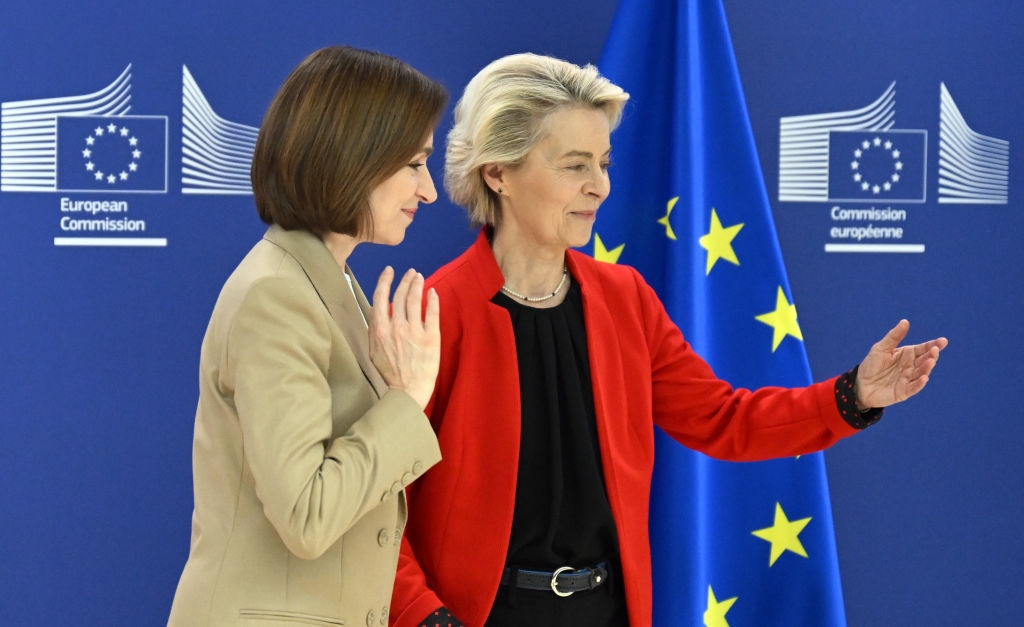
Moldova will host its first-ever summit with the EU on Friday – a symbolic milestone that underscores the country's accelerating pivot towards Brussels.
"The summit elevates the relationship to a whole new level, recognising Moldova's strategic importance for the EU," Moldova's Deputy Prime Minister, Cristina Gherasimov, told Euractiv in Brussels.
Yet, behind the ceremonial warmth, a hard political question looms: Can Moldova advance on its own, breaking the tandem it has maintained with Ukraine since both countries received candidate status in 2022?
Leaving Ukraine 'behind'?
A key deliverable is expected to be the inclusion of Moldova into the EU roaming policy, unlocking swift pre-financing under the EU's Growth Plan and cash for infrastructure projects, according to the most recent draft summit declaration, seen by Euractiv."On accession, (the summit) helps build the momentum needed to move forward with negotiations, by demonstrating both political will and progress on reforms," Gherasimov said.
Hungary's Prime Minister Viktor Orbán has been unequivocal on Ukraine – they won't be joining on his watch. The ultimate prospects of both countries remain at the mercy of Budapest, which retains a firm veto over the EU's accession process.
Brussels looks ready to allow Moldova to inch forward, according to the most recent draft summit declaration, seen by Euractiv.
The summit could see a pledge to open negotiations on the so-called 'fundamental cluster' – the package of rule-of-law, judicial, and anti-corruption reforms that countries must implement before aligning with the EU's rulebook in other areas.
Yet the language has been noticeably softened, according to EU officials. An earlier version had pledged to open all six negotiating clusters, but that commitment has been removed, reflecting hesitancy among EU countries wary of moving too quickly.
Officially, the two countries are not tied together, as was the case with North Macedonia and Albania in the past, where neither could have moved without the other until EU leaders removed that provision.
Kyiv and Chișinău had merely made a political pact to support each other and advance their reforms in lockstep. But this is by no means binding.
Concerns about the optics of un-fastracking a Ukraine still crippled by war, however, have led to some confusing messaging from Brussels, including from Enlargement Commissioner Marta Kos.
'Many feel that we can't give the impression of leaving Ukraine somehow behind, especially not after they've committed to a reform push under the worst war circumstances,' one EU diplomat said.
Denmark, too, which just took over the EU's six-month presidency, remains uncertain when it will be able to move ahead with the next accession steps.
Russia looming
For Moldova's President Maia Sandu, even such partial progress would be a political windfall. EU membership enjoys broad support at home, and Sandu has staked her reputation on bringing her country closer to Brussels.
Her pro-EU platform won her re-election and an EU membership referendum last autumn, despite the polls being marred by alleged Russian meddling.
Russian interference could again play a role in the country's parliamentary elections this September. The summit declaration is expected to strongly condemn Moscow's 'persistent hybrid threats,' from energy blackmail to disinformation campaigns designed to destabilise Moldova's democracy.
It will also call on Russia to withdraw its troops from the pro-Russian separatist Transnistria region, where Moscow has maintained a military presence since the 1990s.
'Already now, we are seeing efforts [by Russia] to downplay the significance of the summit of our engagement (…) a full-scale information war has been launched against Moldova, and the strategy is pretty clear,' one EU official said.
With the summit, 'the EU wish is to show Moldovan citizens, [but] also those who try to undermine their choices, that the EU is there, the EU supports Moldova, and Moldova does not stand alone,' a second EU official said.
(om)
Hashtags

Try Our AI Features
Explore what Daily8 AI can do for you:
Comments
No comments yet...
Related Articles


Euractiv
 8 hours ago
- Euractiv
Europeans edge towards Ukraine security guarantee proposal after White House summit
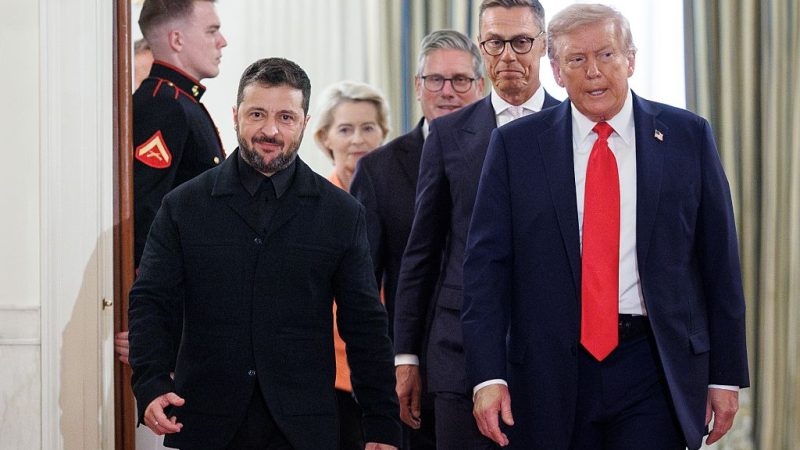
European countries are inching towards a framework of Western security guarantees for Kyiv after Donald Trump hinted at a US "presence" in Ukraine, even as the details remain unclear. Monday's White House summit between Trump, Volodymyr Zelenskyy and six European leaders produced a clearer – if still tentative – US commitment to support Ukraine's security. A day later, EU27 leaders, and separately members of the 'Coalition of the Willing', were briefed via videoconference on the talks in Washington. "Now is the time to accelerate our practical work to put in place a guarantee similar to NATO's Article 5 with continued US engagement," European Council President António Costa told EU leaders in Tuesday's follow-up meeting. Drafting a framework European officials say that negotiators will now begin sketching a blueprint of security guarantees intended to pave the way for a possible meeting between Zelenskyy and Vladimir Putin. National security advisers from participating countries hope to draft a skeleton framework over the next week, people familiar with the talks say, before a potential follow-up call with Trump. A British read-out of Tuesday's Coalition of the Willing meeting separately said that "planning teams would meet with their US counterparts in the coming days to further strengthen plans to deliver robust security guarantees." So far, a broad consensus on the security guarantees has emerged around three elements: a well-equipped and well-armed Ukrainian armed forces without size restrictions, a multinational 'reassurance force' after a ceasefire, and some form of Washington backing, although the scope of American involvement remains vague. EU leaders also voiced wide support for NATO-style commitments - "Article 5-like protections," as US officials increasingly describe them. While this is a reference to NATO's mutual defence clause, the level of protection remains largely unclear. They also acknowledged that hammering out the details will require painstaking negotiation. Overall, European officials privately note a subtle but telling shift in Trump's rhetoric: from mere 'coordination' of security arrangements to a ' presence of the US." Trump, speaking the morning after White House meetings on Tuesday, told Fox News that US forces could assist Ukraine's allies in deterring future Russian attacks. 'When it comes to security, [Europeans are] willing to put people on the ground,' Trump said, adding Europe would 'front load' them, including 'boots on the ground.' 'We're willing to help them with things, especially, probably talk about by air, because there's nobody [has the] kind of stuff we have,' he added, indicating Washington could focus on air defence elements in such plans. EU foreign and defence ministers, meeting informally in Copenhagen next week, are expected to discuss security guarantees, the bloc's top diplomat Kaja Kallas said. 'The EU will contribute to these security guarantees, notably by the training of Ukrainian soldiers and strengthening Ukraine's armed forces and defence industry,' she said. Keeping Putin in check Timing remains the thorniest question. Officials hope to have the framework ready before a potential Zelenskyy-Putin meeting, which could take place within two to three weeks. In Monday's talks at the White House, several European leaders made the pitch to the US side that any Russian refusal to attend such a meeting – or any failure to make progress – should trigger the next round of sanctions. "Whether we call it a ceasefire or a truce is secondary; what matters is that we maintain pressure through sanctions if Russia does not comply," Costa told EU leaders. The European Commission says the next package of measures against Moscow – the nineteenth – could be ready by early September, if required. (mm)
Euractiv
11 hours ago
- Euractiv
Europe must stop playing middleman and start leading on Ukraine
Apostolos Thomadakis is Research Fellow and Head of the Financial Markets and Institutions Unit at the Centre for European Policy Studies (CEPS), and Head of Research at the European Capital Markets Institute (ECMI). The latest revelations about Ukraine's proposals to Washington are telling. Kyiv is preparing to pledge $100 billion in American weapons purchases, financed largely by the EU, in exchange for US security guarantees after a peace deal with Russia. On top of this, Ukraine has offered a $50 billion drone production partnership with US firms. These proposals are designed to appeal to President Trump's transactional instincts, but they also expose an uncomfortable truth: Europe pays the bill while Washington writes the script. The same imbalance is visible in trade. The EU has just concluded a tariff deal with the US that many in Europe regard as a capitulation . Facing the threat of 30% tariffs, Brussels accepted a 15% tariff on most goods, kept 50% tariffs on steel and aluminium and pledged hundreds of billions in US gas purchases and investments. The outcome may have prevented an immediate trade war, but it reinforced a pattern: Washington sets the terms, Europe absorbs the costs. Taken together, these two developments point to a dangerous trajectory. On both security and trade, the EU has drifted into the role of payer and middleman, financing arrangements that serve US priorities while limiting its own ability to act independently . In Ukraine, Europe risks being reduced to financing American weapons and underwriting Trump's 'deal-making', rather than defining the conditions of peace and stability on its own continent. In trade, Europe has accepted asymmetric concessions that weaken its negotiating leverage and signal vulnerability. The ceasefire discussions show how dependent Europe has become. In Washington, German Chancellor Friedrich Merz was reduced to pleading with President Trump to secure a ceasefire with Russia, presenting Europe's position as reactive and dependent. Ukraine, for its part, rightly insists that any settlement must not rest on concessions to Moscow. But the fact that Kyiv courts Washington rather than Brussels for security guarantees reveals how absent the EU remains from the geopolitical table. Europe must break this cycle. By playing the middleman – between Washington and Kyiv, between Washington and Moscow, between Washington and its own member states – the EU abdicates its role as a shaper of outcomes and confines itself to footing the bill. What would leadership look like? Europe should no longer limit itself to financing other people's strategies. It must set its own. That means designing a European security framework for Ukraine, anchored in EU and NATO commitments, with American support but not American primacy. It means pursuing trade policy from a position of strength, resisting coercion and diversifying energy and technology partnerships so Europe cannot be held hostage. It also means unity of purpose: a coordinated diplomatic initiative that frames the ceasefire and peace process in terms of Europe's own security order, not America's electoral calendar. For years, the EU has spoken about becoming less dependent on others for its security – what policymakers call 'strategic autonomy'. The twin challenges of war in Ukraine and economic coercion from the US show that this must move from rhetoric to reality. The Ukrainian document itself notes that 'lasting peace shall be based not on concessions and free gifts to Putin, but on a strong security framework that will prevent future aggression'. Europe must ensure that framework is European-led – otherwise, it risks financing an American-designed settlement that leaves its own security fragile. The tariff deal offers a parallel lesson. A Union that cannot defend its own economic interests will struggle to defend its security interests. History will not judge Europe kindly if it remains a middleman – paying, pleading and reacting – rather than leading. At stake is not only Ukraine's sovereignty but Europe's credibility as a geopolitical actor. The time has come for the Union to stop paying for other people's strategies and start writing its own.
Euractiv
15 hours ago
- Euractiv
Hungary's opposition leader accuses Russia of election meddling
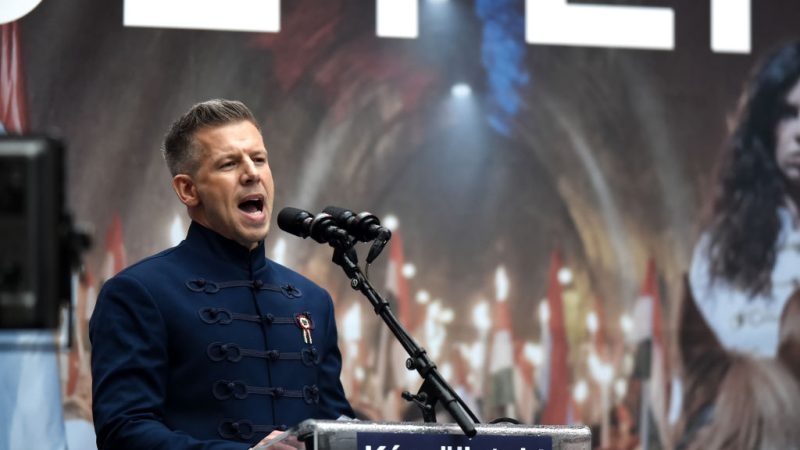
The parliamentary election set for spring 2026 is shaping up Prime Minister Viktor Orbán's toughest challenge to date Euractiv is part of the Trust Project Magnus Lund Nielsen Euractiv Aug 19, 2025 11:24 2 min. read News Based on facts, either observed and verified directly by the reporter, or reported and verified from knowledgeable sources. Hungarian opposition leader Péter Magyar accuses Moscow of attempting to interfere in the country's 2026 parliamentary elections, warning that Russian operatives are using 'disinformation campaigns, cyber operations, or intimidation' to sway voters. In an open letter published Sunday, Magyar demanded 'clear assurances' that Moscow would refrain from interfering in Hungary's domestic affairs, including through cyber operations or intimidation of politicians and citizens, Reuters reports. Magyar, whose Respect and Freedom (Tisza) party is polling ahead of Prime Minister Viktor Orbán's Fidesz, made the remarks after Russia's Foreign Intelligence Service (SVR) claimed the European Commission was plotting 'regime change in Budapest' with him as its preferred candidate. In recent polls, Orbán is trailing Magyar's opposition party by around 10%. 'The last Soviet soldier left our country in June 1991. Now their operatives are back – sometimes working undercover, sometimes openly,' Magyar said in a Facebook post, calling on Russia's ambassador to explain the SVR's comments. Orbán, who has maintained close ties with Moscow since 2010 and opposed EU military aid to Ukraine, has accused Brussels of seeking to install a 'puppet government' in Hungary himself. The parliamentary election set for next spring is shaping up to be Orbán's toughest challenge in his nearly two decades as prime minister. (vib)
