


Resistance isn't a real strategy for the Democrats
Nearly nine months after Donald Trump's reelection, Democrats still can't make sense of it. Only the faintest glimmers of a reset are visible. The only thing that might pass for a strategy seems to be the hope that, given time, voters will finally come to their senses: It's the people who need to think again, not the politicians who are asking for their support.
Given Trump's recklessness, this approach isn't in fact doomed to fail — yet his opponents need to do better. How, exactly? What should a Democratic reset look like?
Let's move quickly past what's obvious, or ought to be.
First, address the voters whose minds you want to change — people who voted for Trump — with respect. They don't like being called idiots and bigots. Acknowledge the elements of validity in Trump's account of what needs to change. Insist that support for Trump is a mistake, but neither groundless nor intelligible only as a consequence of racism or
stupidity.
Second, renounce — don't just decline to discuss — the provably unpopular woke nonsense that party extremists have set as an ideological litmus test. Sex is a social construct. Color-blindness is racist. Speech is violence. Equality is a fraud. Capitalism is evil. Immigrants can't be 'illegal.' The country's true founding was in 1619. And so forth. Democrats should stand for compassion and fairness, but not for an encompassing theory of systemic oppression that most Americans don't recognize and rightly view as unhinged.
So much for the easy part. Equally important, though, is framing a popular and workable policy agenda — and this is less straightforward. Democrats stand for nothing if not redistribution, regulation of market excesses, equal opportunity and support for the less fortunate. But these noble and desirable purposes all involve trade-offs, which Democrats often prefer to ignore. That's a mistake. Voters need to be persuaded that such policies won't do more harm than good and that reformers understand the drawbacks. The party needs to line up with policies that express its values while reassuring voters it knows what it's doing. Woke is the opposite of reassuring, but anti-woke isn't enough to project competence.
The themes I'd recommend are opportunity and security — as opposed to 'justice' or 'equity,' which imply (deliberately or otherwise) fundamental failures of market-based economies and a desire for root-and-branch transformation. Persuadable Trump voters, the target audience, don't despise the rich or long for a progressive utopia. They want pragmatic, intelligible interventions that engage with their economic goals and anxieties.
The most promising ideas address both at once. Dislocation caused by trade and innovation is a main cause of economic insecurity. Historically, innovation has been by far the more disruptive of the two — and the advent of AI could be especially so. Trying to stop such disruptions would be folly, but when jobs are lost, the U.S. should do more to cushion the victims and help them find new, better ways to make a living.
The US has only ever flicked at this, with half-hearted programs such as Trade Adjustment Assistance, too narrowly purposed and seriously underfunded. A bigger and more comprehensive program, delivering income support during the transition from job to job, help with moving costs and associated complications, and guidance on training and further education still won't make economic disruption win-win — but it would spread the costs more broadly and, through upskilling and better allocation of labor, raise productivity and add to the overall gains.
Better schools are critical for advancing opportunity for children of the poor and low-paid. One of America's biggest public-policy anomalies is that government-run schools in prosperous areas are far better financed than schools in poor areas (where financially stressed parents can't make up the difference). Equality of opportunity means using federal money to redress this imbalance.
Probably even more important is to raise the quality of teaching and management in schools that serve the less well-off. Some Democrats may balk, because it means recognizing (as parents did during the pandemic) that teachers' unions put their members' interests above those of the children they teach. The remedy is to empower parents with vouchers and force schools to compete. Ideally, the alliance between Democrats and public-sector unions — and with teachers above all — would be scrapped entirely. That's unimaginable, but the terms of this partnership need to be revised.
Ensuring that work pays should be a central part of the Democrats' opportunity agenda. Make low-wage subsidies such as the earned-income tax credit more generous. Simplify taxes and benefits to reduce unintended disincentives (as when a small increase in wages triggers a big loss of income). Grasp the nettle of Social Security reform and redesign the payroll tax, which kicks in at the first dollar of earnings.
In my dreams, the payroll tax is replaced with a value-added tax, which is less regressive, less anti-work and less anti-saving — but the Democrats have a long way to go before voters would trust them with such a radical change.
Helping those on low incomes to save is about security as well as opportunity: Living paycheck to paycheck is stressful. Existing savings reliefs and incentives tilt heavily in favor of the better off, and are inordinately complicated to boot. Democrats should propose subsidized auto-enrollment plans for saving, to supplement Social Security in retirement and to meet unforeseen expenses; they should design them with those on low pay uppermost in mind.
Health-care costs — Obamacare notwithstanding — are still a principal cause of financial insecurity. Democrats have proposed various kinds of 'public option' health insurance. They should dare to press this idea again. This, too, is treacherous terrain because Democrats would be taking their own reform, which many voters unfairly perceive as a failure, back to the drawing board. 'What if they come up with something even worse?'
But it's necessary, because the existing system, even after Obamacare's improvements, is still a disgrace: expensive, complicated, anxiety-inducing because of the link to employer-provided coverage (lose your job, you're uninsured), yielding poor health outcomes (by international standards), and failing, above all, to shield people of limited means from the risk of financial catastrophe.
Two last things — falling again under the heading of 'should be obvious.'
First, fiscal discipline. The policies sketched above will cost money. (Remember trade-offs?) Democrats must explain how they'll fund their plans. 'Let the top 1% pay' won't cut it. Nor will 'public debt doesn't matter.' Much of the burden will fall on the middle class. The challenge will be to explain why, on balance, the middle class will be better off as a result.
Second, Americans want the border secured and are entitled to choose who they welcome as immigrants. Merely turning up at the border isn't a qualification for eventual citizenship. Whatever else they do, Democrats must bring themselves as a party to care about the distinction between legal and illegal immigration.
That's a lot to discuss. The party, still firmly in resistance mode, is barely even thinking about it. Democrats must understand that resistance isn't a programme for government — which is what beating the Republicans might well require.
(Clive Crook is a Bloomberg Opinion columnist and member of the editorial board covering economics.)

Try Our AI Features
Explore what Daily8 AI can do for you:
Comments
No comments yet...
Related Articles

Qatar Tribune
 2 hours ago
- Qatar Tribune
Resistance isn't a real strategy for the Democrats
Clive Crook Nearly nine months after Donald Trump's reelection, Democrats still can't make sense of it. Only the faintest glimmers of a reset are visible. The only thing that might pass for a strategy seems to be the hope that, given time, voters will finally come to their senses: It's the people who need to think again, not the politicians who are asking for their support. Given Trump's recklessness, this approach isn't in fact doomed to fail — yet his opponents need to do better. How, exactly? What should a Democratic reset look like? Let's move quickly past what's obvious, or ought to be. First, address the voters whose minds you want to change — people who voted for Trump — with respect. They don't like being called idiots and bigots. Acknowledge the elements of validity in Trump's account of what needs to change. Insist that support for Trump is a mistake, but neither groundless nor intelligible only as a consequence of racism or stupidity. Second, renounce — don't just decline to discuss — the provably unpopular woke nonsense that party extremists have set as an ideological litmus test. Sex is a social construct. Color-blindness is racist. Speech is violence. Equality is a fraud. Capitalism is evil. Immigrants can't be 'illegal.' The country's true founding was in 1619. And so forth. Democrats should stand for compassion and fairness, but not for an encompassing theory of systemic oppression that most Americans don't recognize and rightly view as unhinged. So much for the easy part. Equally important, though, is framing a popular and workable policy agenda — and this is less straightforward. Democrats stand for nothing if not redistribution, regulation of market excesses, equal opportunity and support for the less fortunate. But these noble and desirable purposes all involve trade-offs, which Democrats often prefer to ignore. That's a mistake. Voters need to be persuaded that such policies won't do more harm than good and that reformers understand the drawbacks. The party needs to line up with policies that express its values while reassuring voters it knows what it's doing. Woke is the opposite of reassuring, but anti-woke isn't enough to project competence. The themes I'd recommend are opportunity and security — as opposed to 'justice' or 'equity,' which imply (deliberately or otherwise) fundamental failures of market-based economies and a desire for root-and-branch transformation. Persuadable Trump voters, the target audience, don't despise the rich or long for a progressive utopia. They want pragmatic, intelligible interventions that engage with their economic goals and anxieties. The most promising ideas address both at once. Dislocation caused by trade and innovation is a main cause of economic insecurity. Historically, innovation has been by far the more disruptive of the two — and the advent of AI could be especially so. Trying to stop such disruptions would be folly, but when jobs are lost, the U.S. should do more to cushion the victims and help them find new, better ways to make a living. The US has only ever flicked at this, with half-hearted programs such as Trade Adjustment Assistance, too narrowly purposed and seriously underfunded. A bigger and more comprehensive program, delivering income support during the transition from job to job, help with moving costs and associated complications, and guidance on training and further education still won't make economic disruption win-win — but it would spread the costs more broadly and, through upskilling and better allocation of labor, raise productivity and add to the overall gains. Better schools are critical for advancing opportunity for children of the poor and low-paid. One of America's biggest public-policy anomalies is that government-run schools in prosperous areas are far better financed than schools in poor areas (where financially stressed parents can't make up the difference). Equality of opportunity means using federal money to redress this imbalance. Probably even more important is to raise the quality of teaching and management in schools that serve the less well-off. Some Democrats may balk, because it means recognizing (as parents did during the pandemic) that teachers' unions put their members' interests above those of the children they teach. The remedy is to empower parents with vouchers and force schools to compete. Ideally, the alliance between Democrats and public-sector unions — and with teachers above all — would be scrapped entirely. That's unimaginable, but the terms of this partnership need to be revised. Ensuring that work pays should be a central part of the Democrats' opportunity agenda. Make low-wage subsidies such as the earned-income tax credit more generous. Simplify taxes and benefits to reduce unintended disincentives (as when a small increase in wages triggers a big loss of income). Grasp the nettle of Social Security reform and redesign the payroll tax, which kicks in at the first dollar of earnings. In my dreams, the payroll tax is replaced with a value-added tax, which is less regressive, less anti-work and less anti-saving — but the Democrats have a long way to go before voters would trust them with such a radical change. Helping those on low incomes to save is about security as well as opportunity: Living paycheck to paycheck is stressful. Existing savings reliefs and incentives tilt heavily in favor of the better off, and are inordinately complicated to boot. Democrats should propose subsidized auto-enrollment plans for saving, to supplement Social Security in retirement and to meet unforeseen expenses; they should design them with those on low pay uppermost in mind. Health-care costs — Obamacare notwithstanding — are still a principal cause of financial insecurity. Democrats have proposed various kinds of 'public option' health insurance. They should dare to press this idea again. This, too, is treacherous terrain because Democrats would be taking their own reform, which many voters unfairly perceive as a failure, back to the drawing board. 'What if they come up with something even worse?' But it's necessary, because the existing system, even after Obamacare's improvements, is still a disgrace: expensive, complicated, anxiety-inducing because of the link to employer-provided coverage (lose your job, you're uninsured), yielding poor health outcomes (by international standards), and failing, above all, to shield people of limited means from the risk of financial catastrophe. Two last things — falling again under the heading of 'should be obvious.' First, fiscal discipline. The policies sketched above will cost money. (Remember trade-offs?) Democrats must explain how they'll fund their plans. 'Let the top 1% pay' won't cut it. Nor will 'public debt doesn't matter.' Much of the burden will fall on the middle class. The challenge will be to explain why, on balance, the middle class will be better off as a result. Second, Americans want the border secured and are entitled to choose who they welcome as immigrants. Merely turning up at the border isn't a qualification for eventual citizenship. Whatever else they do, Democrats must bring themselves as a party to care about the distinction between legal and illegal immigration. That's a lot to discuss. The party, still firmly in resistance mode, is barely even thinking about it. Democrats must understand that resistance isn't a programme for government — which is what beating the Republicans might well require. (Clive Crook is a Bloomberg Opinion columnist and member of the editorial board covering economics.)

Qatar Tribune
2 hours ago
- Qatar Tribune
Trump tariffs hit India's shrimp farmers, profits slashed
Agencies On India's southern coast, V Srinivas thrived for two decades by farming shrimp, as the country became the top supplier of the delicacy to the United States. Now, Donald Trump's 50 percent tariff threat is forcing many to consider other ways of making money. Andhra Pradesh state sends the most shrimp from India to the US and farmers there have spent millions of rupees (hundreds of thousands of US dollars) over the years to cultivate high-quality shrimp in saline ponds. Now they are being hit hard as Indian exporters have slashed rates they offer farmers by almost 20 percent after the tariff shock, wiping out most of their profits. 'I am contemplating if I should do fish farming,' said the 46-year-old from Veeravasaram village who has already mortgaged his family property and has $45,800 in outstanding loans. 'These prices will not help me get any profits and I will not be able to pay off my loan.' The United States is the biggest market for India's shrimp farmers and exporters, with clients including US supermarket chains such as Walmart and Kroger. Last year, total seafood exports from India globally stood at $7.4 billion, with shrimp accounting for 40 percent. But the industry is now in troubled waters with President Trump's 25 percent tariff on imports from India already in place - the highest among major economies, and another 25 percent levy to kick in from August 27 to penalize New Delhi for buying Russian oil. By comparison, Ecuador, India's main rival for shrimp exports to the US, faces a much lower 15 percent tariff, heightening its competitive edge. In Andhra, there are around 300,000 farmers engaged in shrimp farming, selling products to dozens of exporters who ship to America. Pawan Kumar, head of the Seafood Exporters Association of India, said orders from US clients have been paused in recent weeks as buyers aren't willing to absorb the tariff, and neither can exporters, forcing the latter to cut prices they pay to farmers. Although India also sells shrimp to other countries such as China, Japan and the UK, and likely will look to expand sales there and diversify into new markets, 'that's not going to happen overnight,' Kumar said. The impact is yet another example of how Trump's tariff threats are causing business disruptions across the world, especially in India, given it faces one of the steepest levies that have soured its relations with Washington. In Andhra, six of 12 farmers Reuters interviewed said they were considering putting shrimp farming on hold and looking at fish farming, vegetable retailing or other local businesses to tide over the crisis. The other six are choosing to wait it out a bit. Each round of shrimp cultivation takes about 2 months or more. While prices being offered for their shrimp are being slashed, the farmers said they still face loan payments and high operating costs for electricity, raw material and feed, as well as high land rentals. 'There's hardly a 20-25 percent profit for us on good days, and if that's getting eaten up, what else is left?,' said Gopinath Duggineni, the chief of a local union in Ongole city, adding the farmers plan to seek financial support from the state government. Ecuador, meanwhile, is closely tracking tariffs on India to seize on business opportunities, but producers there will go slow on new investments amid uncertainty over whether India and the Trump administration could strike a tariff deal, said Jose Antonio Camposano, president of National Chamber of Aquaculture of Ecuador. 'India's exports are highly concentrated in the United States ... just as China is for us. So that is where we could gain ground if India withdraws,' he said.
Qatar Tribune
3 hours ago
- Qatar Tribune
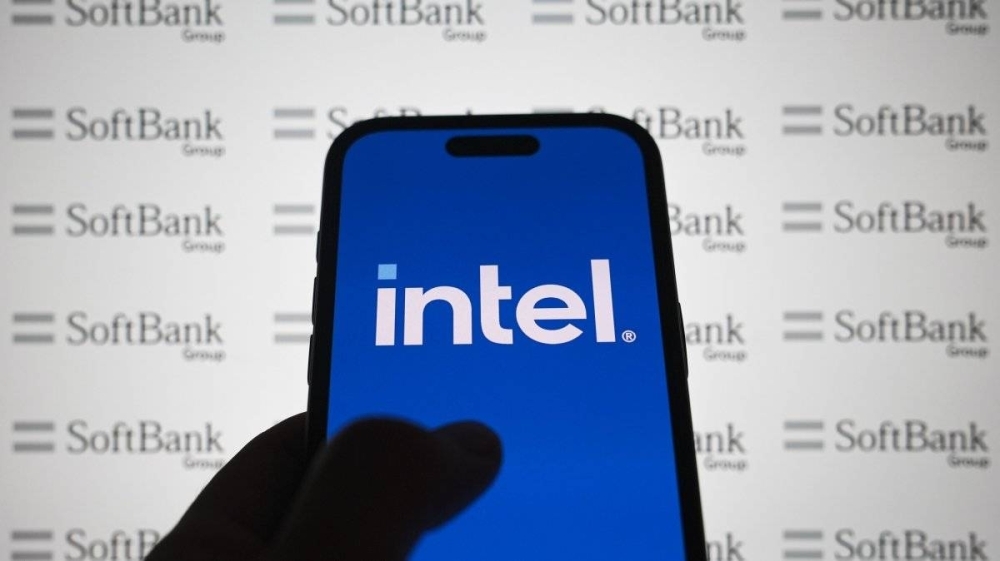
Intel gets $2 bn lifeline in form of SoftBank equity investment
Agencies Intel will receive a $2 billion capital injection from Japanese technology giant SoftBank Group, marking a major show of confidence in the struggling U.S. chipmaker as it works through a major turnaround. The equity investment, announced by the two companies on Monday, is a lifeline for the once-iconic U.S. chipmaker which has struggled to compete after years of management blunders that left it with virtually no foothold in the booming artificial intelligence chip industry. It will make SoftBank a top-10 shareholder of Intel and add to the Japanese tech investor's ambitious bet on artificial intelligence that includes the $500 billion Stargate U.S. data center project. 'SoftBank's investment helps, but it is not what is going to move the dial for Intel,' said Amir Anvarzadeh, Japan equity strategist at Asymmetric Advisors. 'It's more to maintain this very good relationship he has with Trump,' he said, referring to SoftBank CEO Masayoshi Son. The deal follows media reports last week that the U.S. government may buy a stake in Intel, after a meeting between new CEO Lip-Bu Tan and President Donald Trump after the latter called for the chief executive to resign over his ties to Chinese firms. But after meeting with him, Trump relented, saying Tan had an 'amazing story.' It also comes as Tokyo pledged a $550 billion investment package into the U.S. last month as part of a trade deal with Washington. The Intel investment is not currently part of that package, a Japanese government source with knowledge of the negotiations said. SoftBank's decision to invest in Intel is not connected to Trump, a person familiar with the matter told Reuters. 'Semiconductors are the foundation of every industry,' Son said in a statement. 'This strategic investment reflects our belief that advanced semiconductor manufacturing and supply will further expand in the United States, with Intel playing a critical role.' SoftBank will pay $23 per Intel share, a slight discount to Monday's closing price of $23.66. The investment will come via a primary issuance of common stock by Intel, and, based on the U.S. company's market capitalization at close of trading on Monday, represent an equity stake of just under 2%, an Intel spokesperson said. The Japanese company would become the sixth largest investor in Intel, according to LSEG shares closed down 4% on Tuesday following the announcement, while Intel surged 5.6% in after-market hours trading. The Japanese company will only take an equity stake in Intel and will neither seek a board seat nor commit to buying Intel's chips, the person familiar with the matter said. SoftBank posted its first profit in four years in the April-June quarter as it raked in gains from its investment portfolios. It is a major shareholder in Arm Holdings, a British semiconductor and software design company. Intel has struggled financially and recorded an annual loss of $18.8 billion in 2024, its first such loss since 1986, as it grapples with multiple challenges. Its longtime rival AMD has been gaining share in Intel's mainstay personal computer and server semiconductor markets, while its ambitious and costly plan for a chip contracting business that rivals that of Taiwan's TSMC has failed to take company is now considering a significant change to its contract chip manufacturing business to win major customers, Reuters reported last month, in a potentially expensive shift from its previous strategies. 'Intel's dual role as designer and manufacturer/fabricator uniquely positions it as potentially the best platform in the U.S. to compete with TSMC,' said Charu Chanana, chief investment strategist at News reported earlier on Monday that the U.S. government is in talks to take a 10% stake in Intel. Tan, a chip industry veteran who also served as a SoftBank board member before quitting in 2022, thanked Son for 'the confidence he has placed in Intel with this investment.' The Intel funding is the latest in the Japanese company's run of mammoth investment announcements in 2025, which include committing $30 billion to ChatGPT maker OpenAI as well as leading the financing for Stargate.
