


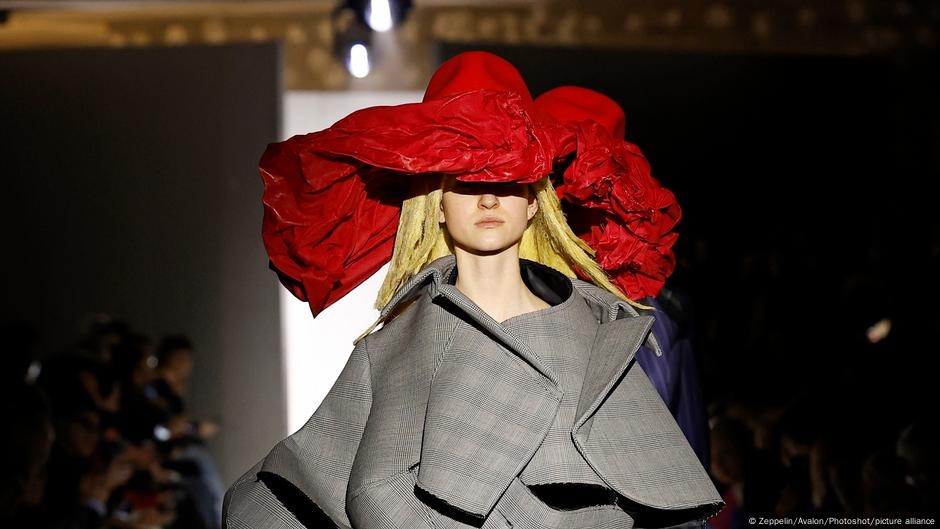
Gucci, Dior, Louis Vuitton face crisis as luxury sales slide – DW – 08/19/2025
When athletes started to return their 2024 Paris Olympic medals after they began to corrode, it was an omen of things to come.
The medals were designed by French jeweler Chaumet, which is owned by luxury-goods giant LVMH.
Though the French mint produced the medals, the bad publicity fell on LVMH after it made a spectacle of its corporate sponsorship of the games.
Paris-based LVMH is not corroding, but it is not doing great either.
In late 2022, the company's market value soared high enough to make Bernard Arnault, its founder and chairman, who controls about half of the company's shares, the richest man in the world. Since then, its stock price has seen a notable drop.
The conglomerate, which owns 75 brands like Louis Vuitton, Dior and jewelers Bulgari and Tiffany & Co., is suffering from slowing sales after a post-COVID boom.
Half-year results released on July 24 show that revenue was down 4% compared with the same six-month period in 2024. Profits from recurring operations were down by 15% and came to €9 billion ($10.5 billion).
Sectors like wine, spirits, fashion and leather goods saw revenue and operating profits decline in the first half of the year. While its watches, jewelry, perfumes and cosmetics businesses remained stable.
LVMH said the company "showed good resilience and maintained its powerful innovative momentum despite a disrupted geopolitical and economic environment." Demand in Europe was "solid" and "remained stable" in the US.
It is not just LVMH that is suffering. Kering, which is also based in Paris and owns Gucci, Bottega Veneta and Yves Saint Laurent, reported a significant decline in sales in the first half of the year.
"Luxury is in a death spiral," predicted Katharine K. Zarrella in a December 2024 guest essay in the . "After a decade of nearly unfettered growth, the sector is bombing across the globe. Analysts point to less-affluent buyers reining in their spending and slowing demand in China."
Zarrella, a longtime fashion editor, saw bad omens all around, like rising prices and poor quality. Beyond that, more brands are selling overstock at discount outlets. The more ubiquitous luxury becomes, the less desirable it is.
"Once-revered establishments that prided themselves on craftsmanship, service and cultivating a discerning and loyal customer base have become mass-marketing machines that are about as elegant and exclusive as the Times Square M&M's store," she concluded.
Uncertainty over tariffs is another headache for the industry. Currently, the Trump administration has put a 15% tariff on European Union goods and a 39% tariff on Swiss goods.
This could have real consequences for the important US market, since a lot of luxury goods are made in France or Italy and a lot of watches come from Switzerland.
Generally, people spend more freely on personal luxury goods when they are optimistic about the future. But these tariffs could go up, go down or disappear.
No one knows how trade talks will proceed, and many are likely to just wait and see.
While in China, some brands are doing fine, others are way down, says Imke Wouters, a partner at consultancy Oliver Wyman and a retail expert with 15 years of experience in China.
Looking ahead, Wouters thinks the industry will see more moderate growth than in the recent past. "It's not like the high days when all luxury brands were doing well," she told DW. There will be winners and losers.
US tariffs on European luxury goods won't impact Chinese buyers, but geopolitical uncertainty is keeping them closer to home. In the past, the Chinese bought around 40% of their luxury goods at home. Now, as they rediscover mainland China, Wouters thinks around 75% is bought within the country.
But as the Chinese economy struggles, many aspirational shoppers have fallen away, and those left may be less eager to spend on luxury goods.
To stay successful with the remaining Chinese shoppers, luxury companies have to double down on their core customers and the customer experience, says Wouters. They have to offer something unique and make sure price hikes reflect better quality.
To view this video please enable JavaScript, and consider upgrading to a web browser that supports HTML5 video
With many buyers holding back, the luxury goods industry could be facing its biggest setback since the 2008-2009 financial crisis, not counting the COVID shock, according to a new report by consultancy Bain & Company.
Last year, luxury sales were down 1% globally. There has been a further decline this year. The Bain analysts foresee a moderate decline of 2-5% for the industry by year's end. They believe that its prospects will be brighter in the future.
"Rising global incomes, generational wealth transfers, and a projected 20% increase in the number of high-net-worth individuals will further expand the pool of potential luxury buyers," Claudia D'Arpizio and Federica Levato wrote in a press statement.
But a bigger pool of shoppers is not enough, warned the pair. "Brands will need to rethink how they engage younger consumers, avoid over-reliance on top spenders, and build emotional connections that go beyond transactional loyalty."
Hashtags

Try Our AI Features
Explore what Daily8 AI can do for you:
Comments
No comments yet...
Related Articles


Int'l Business Times
 2 hours ago
- Int'l Business Times
From Soil Science to Skyline: The Engineer Behind Breakthroughs in Urban Foundations
Look up at the shimmering towers of modern megacities—New York, Dubai, Hong Kong—and it's easy to be captivated by the brilliance of steel and glass. But the true story of these engineering marvels begins far below the surface. Beneath every iconic skyline lies a deeper truth: the invisible world of soil, pressure, and innovation. And at the center of this world is Dr. Reza Zahedi—an engineer, entrepreneur, and global executive who is reshaping how cities rise. In an era where urban resilience is no longer optional, Zahedi's pioneering work is redefining the science—and business—of foundations. His contributions are not just technical advancements; they are strategic frameworks transforming how cities grow, how risks are managed, and how innovation is commercialized at scale. Engineering from the Ground Up For decades, foundation design relied heavily on conventional rules of thumb, historical assumptions, and reactive adjustments. Dr. Zahedi challenged this legacy approach with something fundamentally new: Adaptive Foundation Optimization (AFO). His system integrates high-resolution geotechnical data with real-time modeling, enabling engineers to anticipate, not just respond to, underground behavior. Where past methods introduced risk, AFO injects precision. A notable example unfolded in Zurich's central district, where shifting clay subsoils threatened to derail a major infrastructure project. By implementing Zahedi's method, the team delivered on time and on budget—an increasingly rare outcome in high-density urban development. "Every construction site hides a unique geological fingerprint," Zahedi explains. "Ignoring it is like building blindfolded." The stakes are high: global studies show inadequate subsurface data can inflate urban project costs by 20% or more. Zahedi's framework turns this vulnerability into a strength—injecting confidence into high-stakes decision-making. From Innovation to Industry: Building a Business Around Foundations What sets Dr. Zahedi apart is not just his scientific innovation—but his ability to bring it to market. He is the founder and CEO of Zahedi Company Inc., a U.S.-based real estate and engineering consultancy specializing in both advanced foundation systems and comprehensive real estate strategy and asset management. He also serves as Managing Director of Rock Asset GmbH, a German-based firm focused on infrastructure consulting and urban development. Through this dual-entity structure, Zahedi has built a global platform that integrates science, real estate, and infrastructure delivery—bridging high-level analysis with commercial viability. His companies serve institutional clients, developers, municipalities, and investors across Europe, Asia, and North America. "You can have the best solution in the world," he notes, "but unless it fits the realities of time, cost, and coordination, it won't see daylight." Executive Leadership Behind Innovation and Expansion At the helm of Rock Asset GmbH and Zahedi Company Inc., Dr. Zahedi operates in a multinational executive capacity—overseeing teams across business functions ranging from geotechnical engineering to real estate advisory and portfolio management. He leads strategic planning, project execution, and financial oversight while directing departments responsible for design implementation, risk assessment, and property operations. His executive scope includes international market expansion, contract negotiation, partnership development, and innovation strategy. "Leadership today means seeing the whole landscape—technical, legal, financial, and social," Zahedi says. "It's about guiding the organization through complexity with clarity and intention." Under his leadership, both firms have expanded their reach, entering new markets and managing multi-million-dollar infrastructure and real estate assets. Turning Risk into a Planning Asset Today's urban developments face a labyrinth of hidden complications—aging infrastructure, seismic hazards, tight regulations, and limited space. Zahedi's response isn't to eliminate complexity—it's to organize it. By championing integrated project teams that include engineers, economists, environmental scientists, legal advisors, and urban planners, he has created a new collaborative blueprint for resilient design. His philosophy transforms risk from a constraint into a catalyst. "Risk isn't the enemy," he says. "It's the birthplace of better planning." This approach is now influencing urban development models worldwide, as cities integrate cross-disciplinary insight into long-range infrastructure and property strategies. Strategic Stillness and Leadership in Motion Zahedi's influence goes beyond software or soil. As a leader, he brings together interdisciplinary teams with a rare mix of calm resolve and forward momentum. His concept of strategic stillness—pausing deliberately before acting—has become a core principle in how he trains teams and mentors young engineers. "Stillness isn't stagnation," he explains. "It's the space where meaningful innovation begins." From technical staff to real estate analysts and project managers, Zahedi promotes a culture of clarity, intentionality, and shared purpose—across borders and industries. Foundations as a City's Soul More than concrete and steel, Zahedi sees foundations as philosophical statements. "Every foundation laid beneath a city is a declaration about its values and priorities," he says. His systems-thinking approach invites city planners, developers, and policymakers to treat infrastructure and property not as separate verticals, but as part of a living ecosystem. From climate resilience to affordability, Zahedi believes foundational decisions send ripples across generations. In a world grappling with volatility and rapid growth, his call is clear: build cities that are integrated, adaptable, and deeply rooted in purpose. A Quiet Revolution Beneath Our Feet In an industry often focused on what's visible above ground, Dr. Reza Zahedi's work is a reminder that true innovation often begins where no one looks. His methods are changing how cities think, how engineers lead, and how entrepreneurs transform science and real estate into lasting value. "The cities best prepared for the future," he concludes, "will be those that build deep before they build high." From labs in Germany to boardrooms in New York, Zahedi's quiet revolution is reshaping the urban experience—one invisible layer at a time.
Int'l Business Times
7 hours ago
- Int'l Business Times
Beyond the Code: James Pulley's Mission to Educate, Innovate, and Shape the Next Generation of Engineering Experts
James Pulley James Pulley has spent his career at the intersection of curiosity, capability, and value, solving some of the most complex software performance challenges while working to ensure the next generation of engineers is better equipped than the last. "The value in what I do is not the test itself," Pulley says. "It's the recommendation that leads to a change, faster response times, greater scalability, lower costs, or improved resilience." That mission, to deliver performance outcomes while educating others, has guided a professional journey that began as a high school hobbyist tinkering with early computers and bulletin board systems. By college, Pulley had planned on law school until an internship in computer science changed his trajectory. "I realized I could have the challenge and discovery I was looking for right here in technology," he recalls. His first role at a well-known technology company offered a deep dive into operating systems and databases. He later joined an information technology infrastructure company, a global network provider, before moving on to a software quality assurance tools company, a leader in performance and functional testing tools. This diverse foundation in systems, networks, and databases became a key advantage. "When you understand the underlying layers, you can ask better questions about performance," Pulley explains. After years in corporate roles, he transitioned to independent consulting. Following the economic slowdown after 9/11, he began answering thousands of questions in professional software forums, often inadvertently helping competitors. His generosity built a reputation for expertise and problem-solving, leading to high-profile projects. Pulley's career highlights include leading the team for performance testing for a crypto launch from a technical and business perspective. "It was extraordinary, great product management, sharp technical teams, and the right testing approach all coming together," Pulley reflects. Parallel to his consulting work, Pulley founded two initiatives aimed squarely at education: the PerfBytes podcast and Journeyman Publishing . The idea for PerfBytes was sparked over breakfast with colleagues, discussing the lack of formal training and mentorship in the software performance engineering field. Inspired by various humorous talk shows, Pulley built a show with humor at its core. "Most of what I do is analyze statistics; it's dry. Humor makes it digestible," he says. The podcast has since expanded into French and Spanish versions, with spinoffs like News of the Damned , which uses real-world system failures, think high-profile ticket sales crashes, to teach diagnostic techniques. Journeyman Publishing emerged from a similar gap. Few books existed in his niche, and new authors faced steep barriers to publication. Pulley founded the company to help peers share their knowledge. His projects range from technical guides, like The Hitchhiker's Guide to Performance Testing , to his own work, Interviewing & Hiring Software Performance Test Professionals , to niche security and sales engineering titles. The imprint has also ventured into private biography publishing, offering families a way to preserve personal histories with greater quality and lower cost than commercial services. "Journeyman," Pulley notes, was chosen deliberately to reflect the path from apprentice to master in any craft. For Pulley, the common thread is making knowledge accessible. "Most new performance engineers are dropped into the deep end with a tool and no guidance. We need to show them the right questions to ask and how to think diagnostically," he says. Looking ahead, Pulley is turning more attention to public speaking, blending his decades of technical insight with relatable stories that convey the business stakes of performance engineering. In October of this year, as part of his Chief Performance Officer role, he will be in Nashville delivering a presentation on the intersection of artificial intelligence and software performance. "AI touches every stage, from gathering requirements to building and running tests, to analyzing results. But it's in the analysis where real value is generated," he explains. Whether in a boardroom, on a podcast, or behind a microphone at an industry conference, James Pulley's mission remains constant: solve critical problems today, and equip the next generation to solve them even better tomorrow. "I have seen a lot of systems die, and I have seen a lot live," he says. "This often comes down to knowledge, and whether we have shared it well enough."

DW
16 hours ago
- DW
Gucci, Dior, Louis Vuitton face crisis as luxury sales slide – DW – 08/19/2025
The personal luxury goods market is losing its luster. Recent sales figures show that the industry, which proved resilient after pandemic lockdowns, is slowing down. Is luxury finally going out of style? When athletes started to return their 2024 Paris Olympic medals after they began to corrode, it was an omen of things to come. The medals were designed by French jeweler Chaumet, which is owned by luxury-goods giant LVMH. Though the French mint produced the medals, the bad publicity fell on LVMH after it made a spectacle of its corporate sponsorship of the games. Paris-based LVMH is not corroding, but it is not doing great either. In late 2022, the company's market value soared high enough to make Bernard Arnault, its founder and chairman, who controls about half of the company's shares, the richest man in the world. Since then, its stock price has seen a notable drop. The conglomerate, which owns 75 brands like Louis Vuitton, Dior and jewelers Bulgari and Tiffany & Co., is suffering from slowing sales after a post-COVID boom. Half-year results released on July 24 show that revenue was down 4% compared with the same six-month period in 2024. Profits from recurring operations were down by 15% and came to €9 billion ($10.5 billion). Sectors like wine, spirits, fashion and leather goods saw revenue and operating profits decline in the first half of the year. While its watches, jewelry, perfumes and cosmetics businesses remained stable. LVMH said the company "showed good resilience and maintained its powerful innovative momentum despite a disrupted geopolitical and economic environment." Demand in Europe was "solid" and "remained stable" in the US. It is not just LVMH that is suffering. Kering, which is also based in Paris and owns Gucci, Bottega Veneta and Yves Saint Laurent, reported a significant decline in sales in the first half of the year. "Luxury is in a death spiral," predicted Katharine K. Zarrella in a December 2024 guest essay in the . "After a decade of nearly unfettered growth, the sector is bombing across the globe. Analysts point to less-affluent buyers reining in their spending and slowing demand in China." Zarrella, a longtime fashion editor, saw bad omens all around, like rising prices and poor quality. Beyond that, more brands are selling overstock at discount outlets. The more ubiquitous luxury becomes, the less desirable it is. "Once-revered establishments that prided themselves on craftsmanship, service and cultivating a discerning and loyal customer base have become mass-marketing machines that are about as elegant and exclusive as the Times Square M&M's store," she concluded. Uncertainty over tariffs is another headache for the industry. Currently, the Trump administration has put a 15% tariff on European Union goods and a 39% tariff on Swiss goods. This could have real consequences for the important US market, since a lot of luxury goods are made in France or Italy and a lot of watches come from Switzerland. Generally, people spend more freely on personal luxury goods when they are optimistic about the future. But these tariffs could go up, go down or disappear. No one knows how trade talks will proceed, and many are likely to just wait and see. While in China, some brands are doing fine, others are way down, says Imke Wouters, a partner at consultancy Oliver Wyman and a retail expert with 15 years of experience in China. Looking ahead, Wouters thinks the industry will see more moderate growth than in the recent past. "It's not like the high days when all luxury brands were doing well," she told DW. There will be winners and losers. US tariffs on European luxury goods won't impact Chinese buyers, but geopolitical uncertainty is keeping them closer to home. In the past, the Chinese bought around 40% of their luxury goods at home. Now, as they rediscover mainland China, Wouters thinks around 75% is bought within the country. But as the Chinese economy struggles, many aspirational shoppers have fallen away, and those left may be less eager to spend on luxury goods. To stay successful with the remaining Chinese shoppers, luxury companies have to double down on their core customers and the customer experience, says Wouters. They have to offer something unique and make sure price hikes reflect better quality. To view this video please enable JavaScript, and consider upgrading to a web browser that supports HTML5 video With many buyers holding back, the luxury goods industry could be facing its biggest setback since the 2008-2009 financial crisis, not counting the COVID shock, according to a new report by consultancy Bain & Company. Last year, luxury sales were down 1% globally. There has been a further decline this year. The Bain analysts foresee a moderate decline of 2-5% for the industry by year's end. They believe that its prospects will be brighter in the future. "Rising global incomes, generational wealth transfers, and a projected 20% increase in the number of high-net-worth individuals will further expand the pool of potential luxury buyers," Claudia D'Arpizio and Federica Levato wrote in a press statement. But a bigger pool of shoppers is not enough, warned the pair. "Brands will need to rethink how they engage younger consumers, avoid over-reliance on top spenders, and build emotional connections that go beyond transactional loyalty."
